

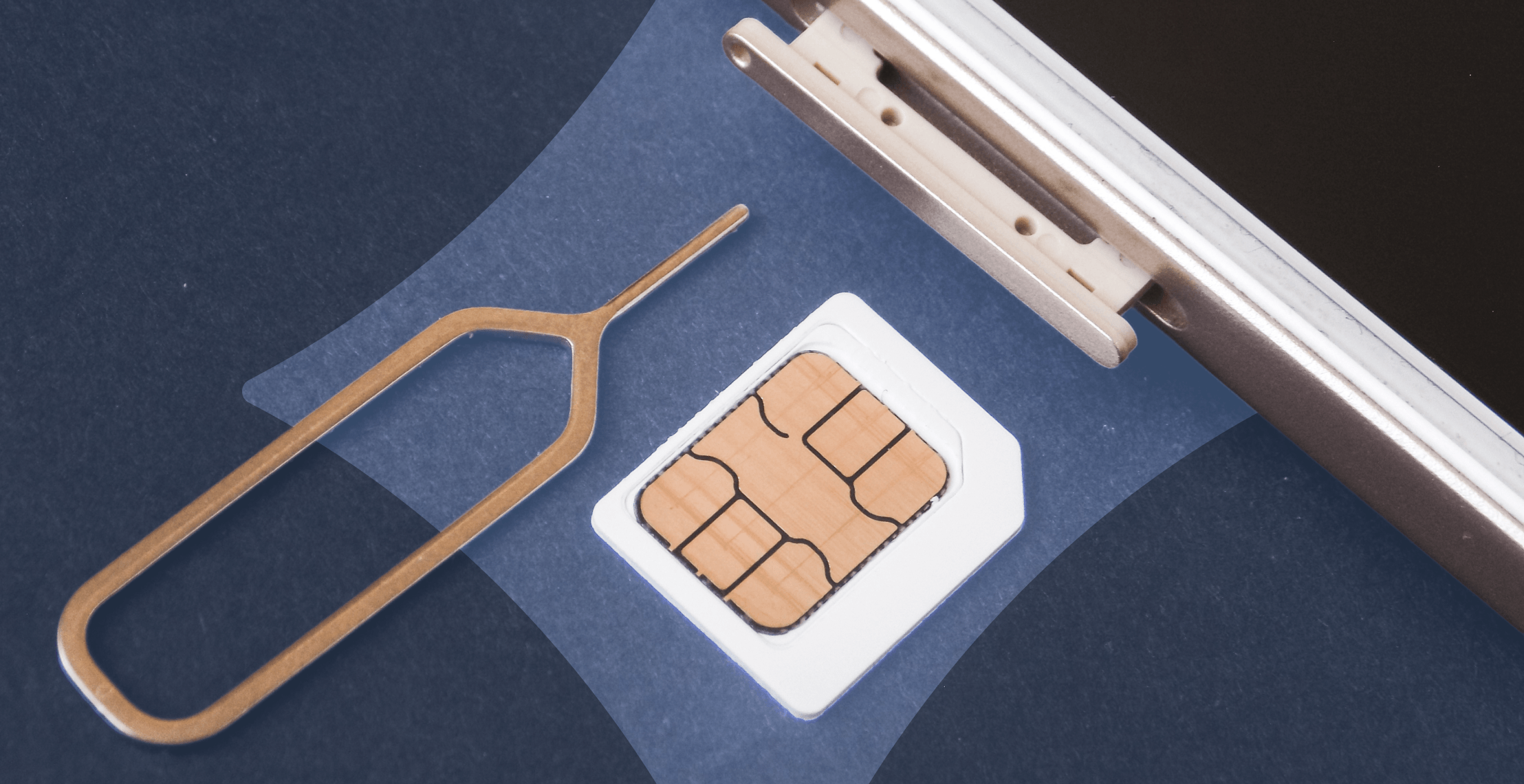
If you’re buying a new phone or getting a new SIM card for any reason, using the correct size is vital for proper functionality. SIM cards come in multiple sizes like standard and micro, but these can look almost identical at first glance. Picking the wrong size can mean a frustrating trip back to the store, a phone that won’t connect, or even a damaged SIM tray.
Don’t let SIM card confusion keep you from accessing your phone’s best features. We’re here to lay out the details so you can always know what to use with your device. If your phone is from the past several years, there’s a good chance it uses a nano SIM card.
A nano SIM is the smallest physical SIM card used in most modern smartphones. Learn how this latest design differs from earlier SIM cards and determine whether a nano SIM is the correct size for your phone. We’ll also see how these cards stand up to eSIMs, a digital alternative that’s even more adaptable and convenient for today’s telecommunication needs.
The history of nano SIMs
A nano SIM is the smallest SIM card used in most modern smartphones. It stores your mobile subscriber information so your phone can connect to your carrier’s network for calls, texts, and mobile data.
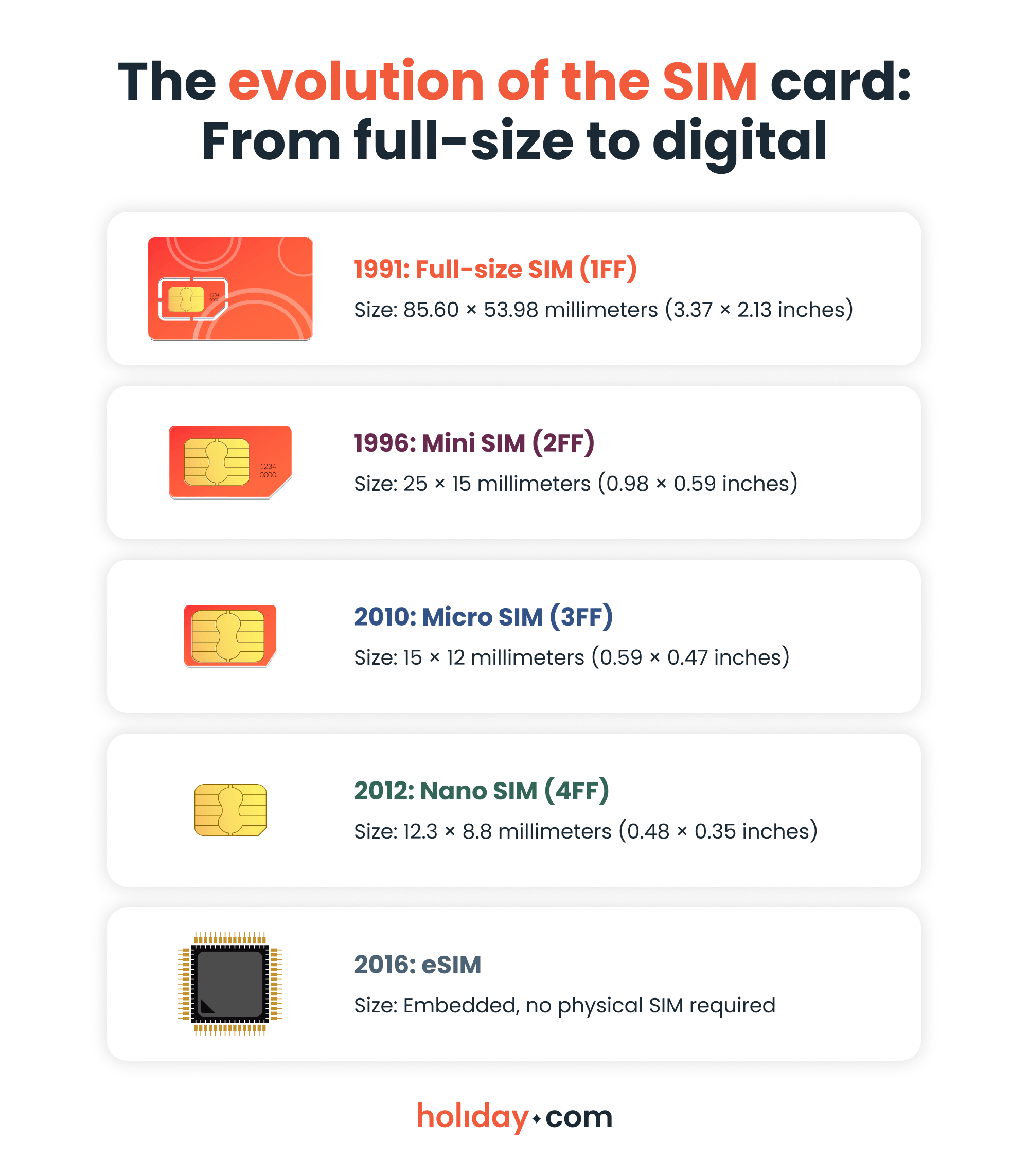
Introduced in 2012 to meet the demand for smaller components, a nano SIM measures 12.3 millimeters by 8.8 millimeters (0.48 inches by 0.35 inches). It’s significantly smaller than earlier variants such as the mini SIM, but the chip itself is identical to larger SIMs.
By reducing the plastic around the chip, manufacturers free up space inside devices for larger batteries and more advanced cameras while keeping the design compact. Despite its size, it performs the same essential functions as other SIM cards.
The nano SIM is technically classified as 4FF, which stands for “Fourth Form Factor.” This designation marks it as the fourth stage in the development of SIM cards, following the full-size, mini, and micro versions.
What are the pros and cons of nano SIMs?
Understanding the benefits and limitations of nano SIM cards can help you avoid connectivity issues and make smarter decisions for your phone.
Pros and benefits
✔ Space efficient. Takes up minimal room inside your device compared to other SIM cards, allowing manufacturers to include better features and slimmer designs.
✔ Fits most modern phones. While trends are shifting to digital-only eSIMs, many modern phones still support nano SIM cards. Check your phone’s compatibility to be sure.
✔ Supported by carriers worldwide. The prevalence of nano SIM cards ensures you can get service almost anywhere in the world.
✔ Dual SIM compatible. Nano SIM phones may offer dual SIM capability, making it easy to use a travel eSIM like holiday.com alongside your normal SIM for access to data when you travel abroad.
Cons and limitations
✗ Easy to lose. Due to its small size, you can drop or misplace it.
✗ Prone to damage. SIM cards can bend or break if handled roughly, potentially cutting off connectivity.
✗ Switching providers requires manual swapping. You have to remove and insert the SIM yourself, which can be inconvenient, especially on the go.
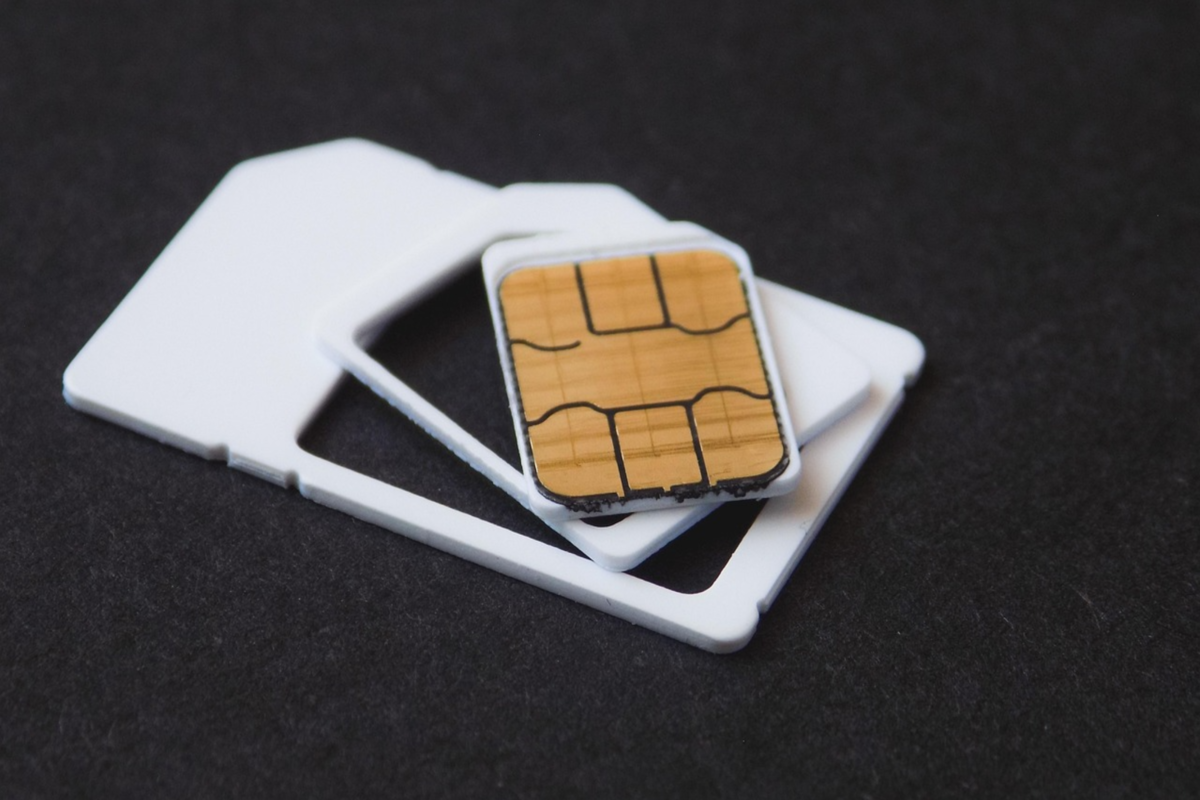
✗ Might require an adapter to fit. Some phone trays need an adapter for nano SIMs, adding an extra step to the setup process.
✗ Frustrating to manage if you switch plans often. Frequent swapping is less flexible compared to digital alternatives like eSIMs.
✗ Not future-proof like eSIMs. Digital SIMs are gradually replacing physical ones, so nano SIM cards will eventually become obsolete.
Which phones use nano SIM?
Most smartphones released since 2012 support nano SIM cards and they’ve been the standard for modern devices. However, you may be able to make it work even if your phone isn’t on the list.
- Apple iPhone: In most parts of the world, iPhone models since iPhone 5 are compatible with nano SIM cards. In the U.S., iPhone 14 was the first to go eSIM-only. Other markets (including Canada and Japan) are joining the eSIM-only trend with the iPhone 17.
- Samsung Galaxy: Almost all Samsung Galaxy phones released since 2014 support nano SIM cards.
- Google Pixel: Almost all Google Pixel models since the original 2016 Pixel can use nano SIM cards. In the U.S., models beginning with the Pixel 10 are eSIM-only.
- OnePlus: All modern OnePlus smartphones, from the OnePlus 5 onwards, work with nano SIM cards.
Other notable phones that support nano SIM:
- Huawei: P9 and newer, Mate 9 and newer
- Xiaomi: Mi 6 and newer, Redmi Note series (recent models)
- Oppo: Find X series and Reno series
- Sony Xperia: Z3 and newer
- LG: G3 and newer, V20 and newer
How to check your phone’s SIM size
You can confirm your phone’s SIM size using one of these methods:
- Inspect it physically (most reliable). Insert a SIM ejector tool or a small paperclip into the tray pinhole to remove it. If the tray is very small and fits only the metal chip without extra plastic space, your phone uses a nano SIM.
- Search online. Use a search engine like Google to search your exact phone model followed by “SIM card size,” or check the specifications page on official sites from the manufacturer or your carrier.
- Check the user manual. Open the technical specifications section in your device’s manual and look for details under SIM or Network.
What to do if your SIM card doesn’t fit your phone
It’s not all lost if your phone supports a bigger SIM size or you have a bigger SIM. Here’s what you can do to make it work:
- Use an adapter if your phone uses a bigger SIM size. If your new SIM is smaller than your phone’s tray, a SIM card adapter can help it fit securely. Slot the nano SIM into the adapter and insert it carefully. Many modern nano SIM cards come with adapters, commonly referred to as a "3-in-1" or "combo/multi-cut" SIM card.
- Convert your bigger SIM into nano. You can cut a standard or micro SIM down to nano size using a SIM cutter, but this carries a risk of damaging the chip. It’s safer to request a new nano SIM from your carrier, which is free or available for a small fee.
How to switch to a nano SIM card
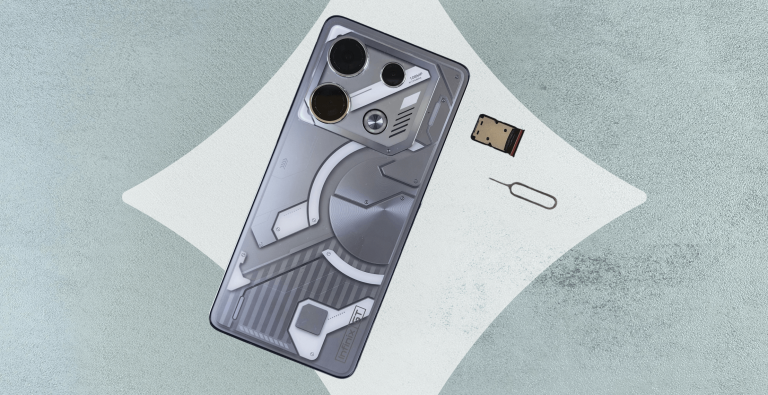
With a few simple steps, you can make sure your new SIM fits and works with your phone. Follow these steps for a smooth transition:
- Check compatibility. Before you swap SIMs, make sure your phone actually takes a nano SIM. Using the wrong card can jam the tray or even damage your phone.
- Activate your nano SIM. Activation is simple. Insert the SIM into your phone’s tray, power on your device, and follow any on-screen instructions. Your phone should connect to your network by default.
HOT TIP
If you switch carriers or travel often, a digital eSIM can be more convenient than a nano SIM. With an eSIM, you can activate your plan without swapping cards and manage multiple lines on one phone.
Should I get a nano SIM card?
A nano SIM is the standard for most modern phones, and it can even work with an adapter if you have an older device with a larger SIM tray. But if your SIM card is functioning as normal, there’s little benefit to making the switch to a nano SIM. While it’s smaller in size, the functionality is identical.
If you’re looking to upgrade your SIM, a digital eSIM is much more convenient for frequent travelers or people who manage multiple lines. With eSIM technology, you can switch between numbers without the hassle of swapping SIM cards. It also lets you use travel eSIMs like holiday.com for seamless connectivity when you visit other countries.
FAQ
-
Is a nano SIM the same as a normal SIM?

Yes and no. While a nano SIM functions the same as a standard SIM, it’s an evolved SIM card that’s much smaller in size.
-
Can a standard SIM be converted to a nano SIM?
Yes. It’s possible to cut a standard SIM down to nano size, since the electronic chip is the same across modern SIM cards. However, this process carries a risk of damaging the sensitive chip, which could disable the SIM. It’s usually safer to request a nano SIM replacement from your carrier. Many providers offer one for free or for a small fee.
-
Which phones use a nano SIM?
Most devices made after 2012, including the iPhone, Samsung Galaxy, and Google Pixel models use nano SIM.
-
Do SIM adapters damage phones?
When used correctly, SIM card adapters are safe. Just ensure the SIM fits to avoid connection issues or tray damage.
-
What to do if your nano SIM isn’t detected
Check for tray damage, reseat the SIM, and restart your phone. If it still doesn’t work, contact your carrier for a replacement SIM card.
-
Is nano SIM becoming obsolete because of eSIM?
Not yet. Nano SIMs are still used, but eSIMs are more flexible if you travel a lot or want to maintain two lines on one phone.
About our author

You might also be interested in...
-
 Glossary
What is data roaming and how does it work?
You step off the plane in a new country, open Google Maps or check your messages, and everything works like normal. What you may not see is how quickly those small actions can add up to big expenses w...
 Ana Marković
 06.09.2026
 -
 Glossary
eKYC verification: What is it, when you need it, and how to do it
Seeing “Verification Failed” on your phone screen can be a major disruption to your plans. If you have to complete a facial scan to activate an eSIM or access international funds, an unsuccessful ...
Sarah Kirton
06.04.2026 -
 Glossary
What is a SIM card? How SIM technology works
A subscriber identity module (SIM) card is inside almost every mobile phone, yet most people never think about what it does or what it contains. Simply put, it keeps your device connected to a mobile ...
Jelena Relić
06.04.2026 -
 Glossary
What is GSM? Everything travelers need to know
If you’re a frequent international traveler, you’ve probably encountered GSM before. Whether you knew it, GSM plays an important role in keeping you connected when you travel abroad. But what exac...
Dawn Prevete
06.01.2026 -
 Glossary
What is an APN and how to fix connection errors
There’s nothing more frustrating than seeing full signal bars on your phone while your internet refuses to load. You might be able to make calls or send texts, but your browser, maps, and apps remai...
Jelena Relić
06.01.2026 -
 Glossary
What is mobile internet? A traveler's guide to staying connected
When you check Google Maps in a new city, send WhatsApp messages, or scroll through Instagram Reels on the go, you’re using mobile internet. Mobile internet (also called mobile or cellular data) con...
Sarah Kirton
05.13.2026