



While eco-friendly travel aims to minimize negative impacts on the environment, it can add complexities to an already packed schedule and increase costs. Fortunately, going green doesn’t have to complicate your trip or hurt your wallet. You just have to prepare early and adapt.
Small actions make a huge difference. For example, you can choose carbon-light transport for short distances or opt for digital tools when available to reduce waste.
We’ll share realistic sustainable travel tips so you can make smarter decisions and reduce your footprint. The goal isn’t to adopt everything at once. Rather, we hope to help you make changes that fit naturally into your travel routine without having to plan everything from scratch.
Sustainable travel tips at a glance
Every little action helps. Start small on your next trip, then move on to more impactful choices as you flesh out future itineraries.
Planning is a lot easier with an actionable guide at hand. Use this checklist as a reference for smarter, greener travel when you hit the road.
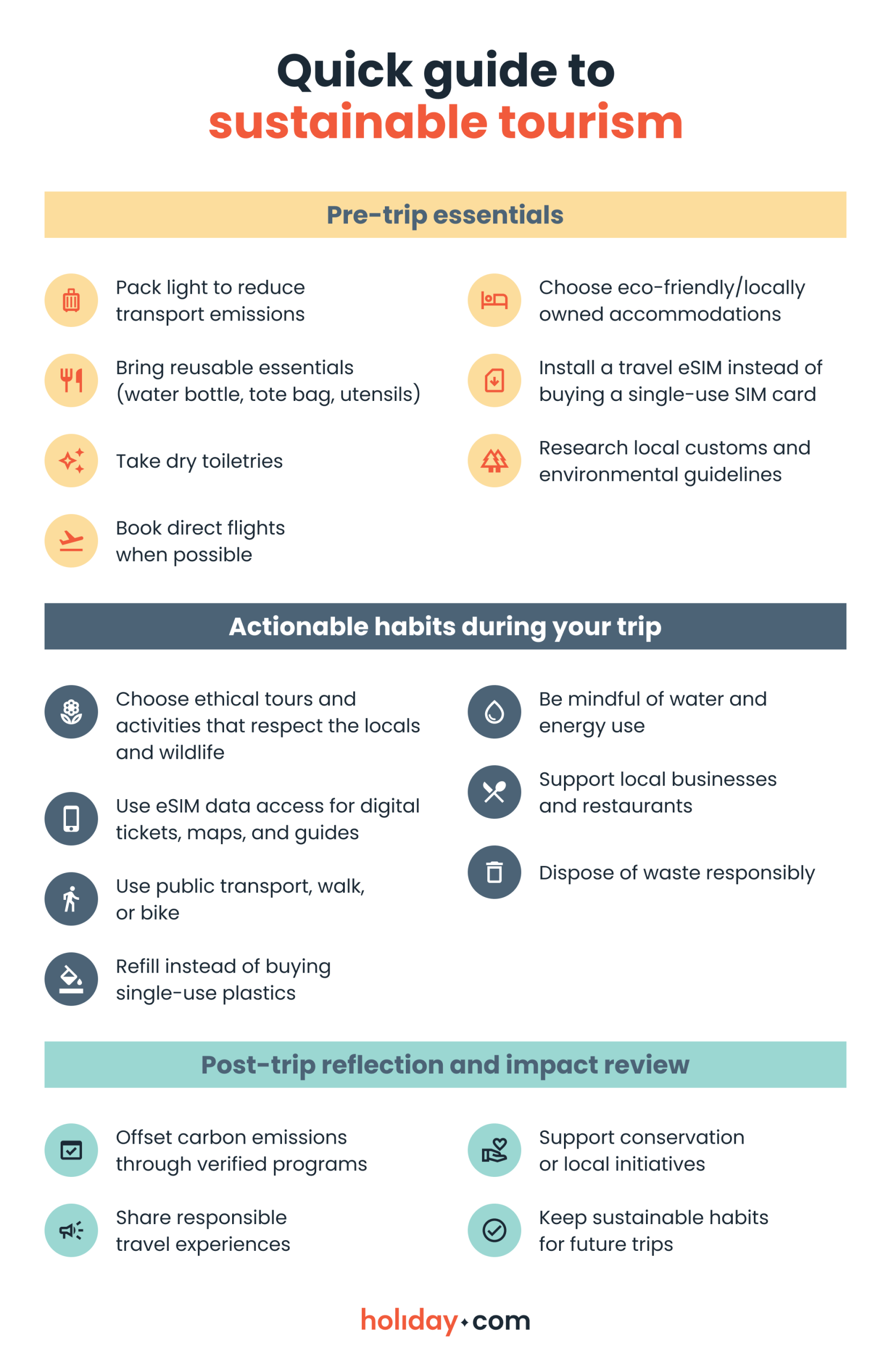
How to practice eco-friendly travel
These changes require minimal effort, but with collective awareness, they slowly add up to a big difference for the planet.
Invest in quality luggage
Durable luggage cuts waste by reducing the need for frequent replacements. Consider options made from sustainable or recycled materials, and try repairing your luggage instead of replacing it when wear and tear occurs.
Pack light
Less luggage means a smaller environmental footprint. Reducing the weight you carry lowers fuel consumption in both flight and ground transport.
Bring what you truly need and focus on multi-purpose pieces. Try mapping outfits by day or activity instead of packing “just in case” items. Another effective strategy is building a travel capsule wardrobe. Choose a small set of neutral pieces that mix-and-match easily and work across multiple days and situations. Shoes, jackets, and accessories tend to take up the most space, so limit duplicates.
Use reusable essentials
Reusable items don’t have to compete for packing space. Choose collapsible water bottles, foldable shopping bags, and compact travel cutlery that fit into small pockets or unused gaps in your luggage. Pair these with travel-size refillable toiletry containers, solid toiletries like shampoo bars, and multipurpose products to minimize both waste and bulk.
Choose low-impact transport
Walk, cycle, or use public transport whenever possible. Alternatively, check for e-scooters at your destination. If you need a car, choose eco-conscious rental options or ridesharing. Both options can reduce pollution compared to individual taxi use. Sustainable transport also eases traffic congestion and supports greener city planning.
Reuse hotel towels and toiletries
Hang your towels to dry and reuse them instead of requesting fresh ones every day. Avoid using the hotel laundry when possible, as it consumes extra water and energy.
Make the most of your toiletries by using them fully and saving half-used items to take home or bring on your next trip.
Monitor water and energy consumption
Turn off lights and unplug electronics when not in use, and close windows when air conditioning is on to save electricity.
Take shorter showers or try a navy shower once in a while. Do an initial rinse for 30 seconds, turn off the water to soap and shampoo, then finish with a 1-minute final rinse. Limiting faucet use while brushing your teeth or washing dishes can save up to 10 liters (2.6 gallons) per minute.
Use a reef-friendly sunscreen
The term “reef-safe” isn’t legally regulated, so it’s best to always check the ingredients list. Choose sunscreens free from oxybenzone, octinoxate, octocrylene, parabens, and triclosan to protect coral reefs and marine life.
Look for non-nano mineral ingredients like zinc oxide and titanium dioxide. It’s a simple swap that has a positive effect on the well-being of delicate ecosystems.
Say no to airline earphones
Bring your own headphones instead of accepting disposable ones on flights. This prevents single-use plastic from ending up in landfills and often provides better sound quality. A small, intentional choice like this reduces waste without affecting your travel experience.
Return brochures so others can reuse them
Instead of discarding tourist brochures after use, hand them to other travelers or leave them at the tour desk or the hotel lobby. Sharing materials reduces paper waste and helps fellow travelers plan responsibly.
High-impact choices to offset your travels

By choosing how you move, where you stay, and which experiences you support, you can significantly reduce your footprint. The following choices require more effort but deliver the greatest long-term benefit.
Lower your carbon impact on long distances
When flying is the only option, fly direct. Nonstop flights produce fewer emissions than those with multiple connections. Choose economy seating to spread the flight’s impact across more passengers and stick to carry-on luggage to reduce aircraft weight. For trips with multiple destinations, use trains, buses, or car-sharing services when you can.
Book local
Sustainable accommodations focus on energy and water efficiency, waste reduction, and responsible sourcing. Properties that make an effort often signal this with examples on their website or in their listings. You can always send a quick message to ask about their practices.
- Think small. Local guesthouses often have a lower environmental footprint and support the regional economy.
- Look for certifications. Labels like Green Key, EarthCheck, LEED, BREEAM, Green Globe, or B Corp indicate verified practices.
- Verify operations. Ask if the property uses low-flow showers, LED lighting, smart thermostats, and renewable energy to confirm that it takes sustainability seriously.
- Check waste reduction. Check property photos and descriptions for refillable soap dispensers, bulk toiletries, or on-site recycling programs. These details indicate the hotel is actively minimizing its environmental impact.
- Support local and seasonal. See if on-site restaurants highlight home-grown or organic ingredients and look for mentions of community initiatives.
- Beware of greenwashing. Properties may use vague labels like “eco-friendly” or “green” without any documented initiatives. If a hotel asks guests to reuse towels but doesn’t take steps to reduce its own water, energy, or waste, it’s shifting responsibility to you.
HOT TIP
Many booking platforms, including Booking.com, Ecobnb, and EcoHotels.com, offer dedicated filters for environmentally friendly properties. Use them to narrow your options and identify accommodations that align with conscious travel practices.
Support ethical tours and experiences
The activities you choose at your destination determine how your travel spending affects communities and the environment. Mindful and deliberate decisions help you contribute in a positive way rather than cause unintended harm.
A quick search like “Is [activity/experience] ethical?” will give you a good idea. For example, you may think a dolphin show is cute and harmless. In reality, it supports the capture and confinement of wild animals, stressful training practices, and industries that prioritize entertainment over welfare. A dolphin-watching boat tour is a low-impact alternative.
Here are some key indicators of ethical and responsible tours:
- Animal welfare focus. Avoid experiences involving animal rides or close contact. Ethical operators partner with sanctuaries that rescue, rehabilitate, and release animals rather than exploiting them for entertainment.
- Support for local communities. Look for operators that hire guides and source supplies from nearby businesses. This ensures your spending benefits the community.
- Respect for culture. Tours should educate you about traditions and history without turning communities into “human zoos.”
- Environmental care. Ethical tour operators support conservation or restoration efforts and adopt everyday practices, such as avoiding single-use plastics.
- Transparency and quality. Look for clear ethical policies on the operator’s website. If no website is available, ask your hotel concierge or guide. Prioritizing small or private groups also reflects a commitment to responsible travel and high-quality experiences.
Take note of these red flags for unethical tours:
- Guaranteed close encounters with wildlife, which may involve feeding the animals.
- Activities that exploit animals for entertainment, such as elephant rides or snake shows.
- Tours that disrespect people or the environment, such as opportunities to take photos with children under the guise of cultural experience.
- “Voluntourism” that prioritizes short-term gratification, such as paying to spend a few days interacting with children in orphanages.
- Operators that provide little to no information on environmental or social practices.
How to support local communities when traveling

Here are some sustainable travel tips that help reduce pressure on overcrowded hotspots and create more meaningful experiences.
Eat, shop, and stay local
Travelers often default to familiar brands out of convenience or uncertainty, but a little curiosity can transform your experience. Make sure your spending goes toward local businesses, such as guesthouses, restaurants, small shops, and markets. This way, more of your money stays within the community rather than large global chains.
Travel off-season and explore hidden gems
Visiting destinations outside peak tourist periods helps reduce overcrowding and lowers strain on infrastructure. You avoid long lines and inflated prices while supporting local economies.
Exploring less-visited areas delivers similar benefits. Popular hot spots often concentrate environmental pressure and economic gains in very small zones. Consider visiting nearby towns, neighborhoods, and less popular attractions that offer comparable experiences. Many travelers hesitate because they fear missing out. In reality, these choices often lead to the most memorable experiences.
Respect culture and natural environments
Adopt habits that help preserve ecosystems and cultural heritage. Follow local guidelines, stay on marked paths, dispose of waste properly, and avoid disturbing wildlife. Respect also extends to customs and social norms. Learn basic etiquette and cultural practices to prevent unintentional harm and foster positive interactions with the locals.
How digital tools reduce waste

Technology is one of the most practical enablers of eco-friendly travel. The biggest advantage is that you can use tools you already rely on to travel more responsibly. When your phone becomes your wallet, map, and planner, reducing waste happens naturally.
Here’s how digital tools can lower your footprint:
- Less paper waste. Digital boarding passes, mobile tickets, and electronic hotel confirmations eliminate printed documents that most of us discard after a single use.
- Less plastic waste. Using digital tools rather than physical tools reduces plastic waste by removing the need for packaging.
- More informed decisions. Carbon footprint trackers and public transport apps help you choose lower-impact alternatives with minimal friction.
HOT TIP
Local SIMs come with plastic packaging and produce more waste. Consider using a travel eSIM like holiday.com for a reliable connection when abroad. Connect to local networks to explore eco-friendly recommendations and use maps to navigate neighbourhoods.
Travel greener, not less
By combining simple habits with higher-impact choices and using technology to support your efforts, you can travel more responsibly without adding stress to your trip.
Remember, sustainable travel isn’t about staying at home or sacrificing enjoyment. It’s about exploring with awareness and making thoughtful choices that support the places and communities you visit. When you treat destinations with care, you help preserve their character and resources for future travelers and residents alike.
FAQ
-
What is the most sustainable way to travel?

Walking, cycling, and public transport are the most sustainable options, while frequent short-haul flights have the highest environmental impact. If you must fly, choose direct flights to help minimize your carbon footprint.
-
How can tech make my trips more eco-friendly?
Technology enables smarter travel choices by reducing physical waste. Choose mobile boarding passes and tickets over printing and use digital maps instead of paper guides.
-
How can I practice sustainable travel?
Start with small habits like packing light and using reusable items. Higher-impact choices, such as staying at eco-friendly accommodations and booking ethically responsible tours, take a bit more research and planning but can have an impact on sustainable travel.
-
What are the three pillars of sustainable tourism?
The three pillars are environmental protection, socio-cultural responsibility, and economic benefits for local communities.
About our author

You might also be interested in...
-
 Travel
8 best all-inclusive destinations for 2026: From budget to luxury
Planning an all-inclusive trip sounds simple until every destination starts to blur together. While one place might promise pristine beaches, another might highlight budget-friendly rates or family pe...
 Chené Murphy
 07.09.2026
 -
 Travel
23 best bachelorette party destinations for every vibe
Planning a bachelorette party sounds fun until the reality of clashing budgets and conflicting schedules sets in. What starts as excitement can quickly turn into stress. The stakes rise when you reali...
Ivana Shteriova
07.08.2026 -
 Travel
Best solo travel destinations for every travel style
Traveling alone is an exciting prospect that becomes daunting when you weigh important factors like affordability, safety, convenience, and your level of social comfort. If you’re planning a solo ex...
Chené Murphy
06.30.2026 -
 Travel
The best food destinations worldwide: 10+ countries for food lovers
With so many “must-visit” food destinations online, it’s harder than ever to tell which places truly deliver and which ones are overhyped. There’s also the uncertainty that the craze around In...
Ivana Shteriova
06.26.2026 -
 Travel
15+ best vacation spots for couples (romantic & unique getaways)
Planning a romantic getaway should be fun, but comparing endless lists to find the perfect trip can make it a chore. What starts as an exciting idea becomes bogged down with too many choices and not e...
Sarah Kirton
06.25.2026 -
 Travel
International travel packing list: Never forget a thing
There are always two types of people: some love packing for an international trip and have a whole system worked out. Others might feel anxious about the packing process and dread pulling out their su...
Ivana Shteriova
06.24.2026