


Flying for the first time can feel nerve-racking, especially when you’re not sure how everything works at a big, bustling airport. Many new travelers worry about finding their way or understanding the boarding process. That makes the experience feel more stressful than it needs to be.
With strict schedules and rigid security processes, airports are daunting to most people who aren’t well-seasoned flyers. Traveling via plane is also often expensive, increasing the stakes if you do anything wrong. Despite this, flying can be enjoyable and downright relaxing if you know what to expect. All it takes is a bit of preparation.
Don’t let airline confusion get in the way of enjoying your first time on an airplane. Our guide explains each step of the journey with simple visuals and checklists so you know what to expect for a smooth first flight.
What should first-time flyers know before they travel?
These simple steps help you feel confident before you reach the airport.
Booking basics
Choose a flight schedule that works for you and check connection times if you have a layover. Direct flights are easier for first-time flyers because there’s less time to spend navigating new airports. Window seats offer elevated views, while aisle seats give you more room to stretch your legs.
Packing essentials and liquids
Each airline has limits for carry-on and checked bags. Liquids must be in containers of three ounces (about 90 milliliters) or less and placed in one clear quart-sized bag. Keep items you can’t afford to lose in your carry-on.
Carry-on essentials
- Passport or ID
- Travel documents (boarding pass, confirmations)
- Medication
- Phone, charger, and headphones
- A light extra layer (jacket or sweater)
- Small toiletries (within size limit)
Documents and apps to prepare
If you printed out your boarding pass, keep it safe and accessible. You can also access a digital copy via your airline’s apps. Check visa requirements early if you’re flying internationally. Keep all travel documents in one folder or pouch.
Staying connected on arrival
If you’re traveling internationally, you likely already know that your phone won’t automatically work abroad. You’ll either have to pay roaming fees through your carrier or find a way to access mobile data on local networks. Travel eSIMs like holiday.com are the easiest way to use the internet because you can set them up before you leave home and get online the moment you land without relying on airport Wi-Fi.
How to navigate the airport for the first time
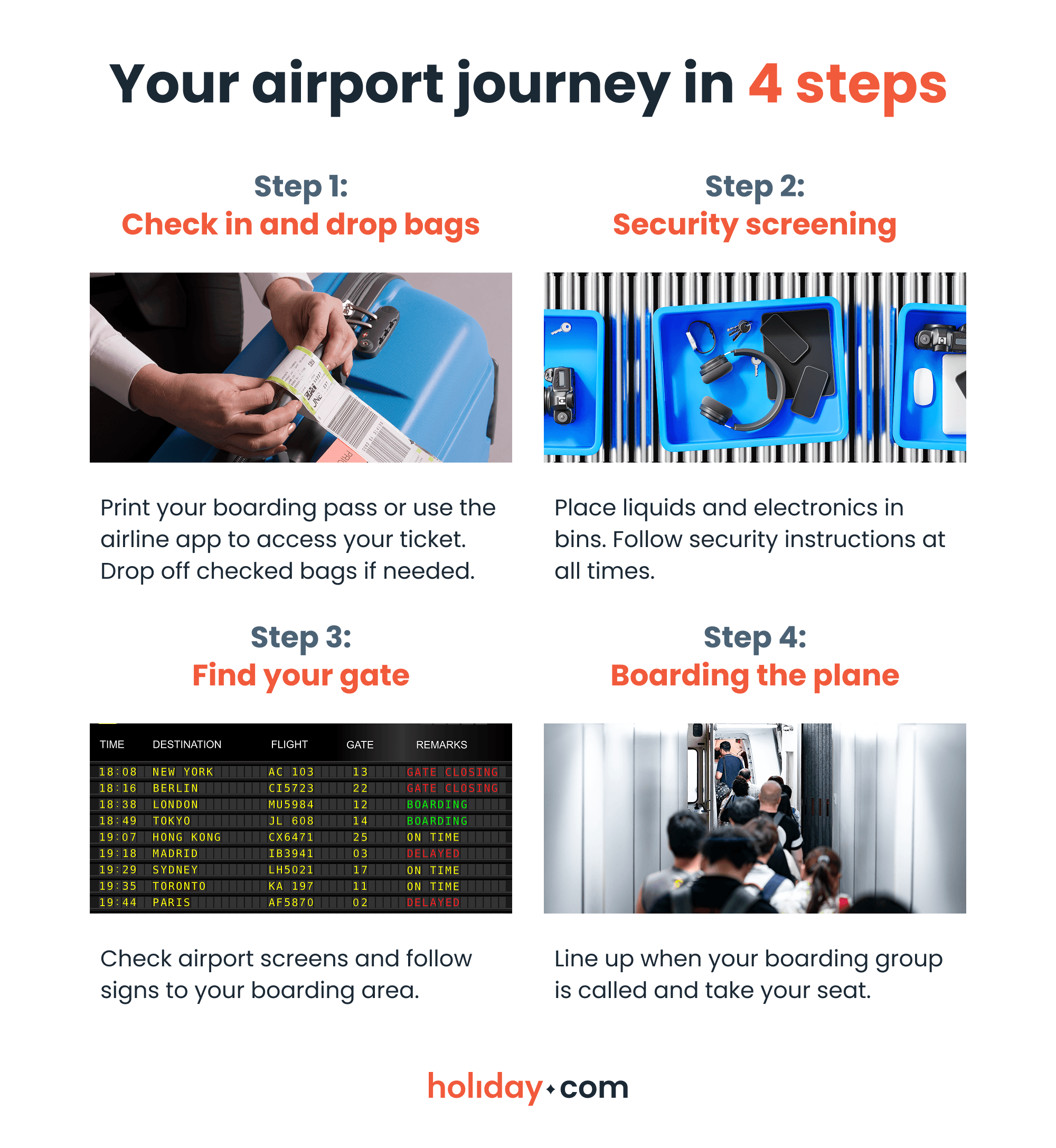
Airports follow a predictable series of steps. Once you learn the flow, the routine becomes much simpler.
Arrival times and finding your terminal
Arrive 90 minutes to two hours early for domestic flights and three hours early for international flights. Your terminal is on your ticket, but double check the screens in the airport for updates.
Checking bags vs. carry-on
If you’re checking a bag, stop at your airline’s counter or bag drop. Otherwise, go straight to security. Always keep medication and valuables in your carry-on, as checked bags can occasionally get misplaced or delayed.
| Typical size | Pros | Cons | |
| Carry-on bag | Restricted to about 22 x 14 x 9 inches maximum | Convenient, stays with you | Limited space |
| Checked bag | Varies, but fewer size restrictions | More room | Fees and possible delays |
Finding your gate and understanding boarding groups
After security, use airport screens to find your gate. It will be on your ticket as well, but it’s not unusual for gates to change at the last minute. The screens in the terminal will have the most up-to-date info on the gate and schedule for your flight.
If you arrive at your gate early, you can take a seat and rest. Boarding generally happens in groups listed on your boarding pass, and it can take several minutes. Different airlines have slightly different systems, so listen for instructions from an airline employee and wait until they call your group before heading to the gate.
What should first-time flyers expect during the flight?
Understanding what the flight feels like helps reduce anxiety.
- Takeoff, turbulence, and landing. Your ears may pop and the plane may shake lightly during turbulence. These sensations are normal.
- In-flight comfort and etiquette. Recline your seat gently, keep noise low, and share space respectfully.
- Entertainment. Download movies, music, or podcasts ahead of time, as Wi-Fi is typically slow or unavailable during flights. Some planes feature seatback screens for your in-flight entertainment.
- Snacks and hydration. Drink water throughout the flight because cabin air is dry. Bring snacks you like and refill your water bottle at the airport before boarding. The airline may also provide snacks and drinks. For longer flights, these might be free. For short haul flights (domestic), you might have to pay additional fees.
What happens after landing?
Once you arrive, you’ll follow a simple path through the airport. Here’s your typical path:
- Deboarding: Wait for the rows ahead of you to exit. The process is orderly and usually quick.
- Immigration and customs: If you are arriving internationally, follow the signs and have your documents ready. Officers may ask you simple questions about the purpose of your trip.
- Baggage claim and transportation: Check airport screens for your carousel number and confirm your luggage tag before leaving. With your travel eSIM already set up, you’ll be able to pull up directions or arrange transport as soon as you reach the arrivals area.
What are common mistakes first-time flyers should avoid?
- Overpacking: Heavy or oversized bags can lead to extra fees. Weigh your luggage at home to avoid surprises.
- Rushing boarding: Boarding happens in groups, so there’s no need to crowd the gate early. Wait for the airline attendant to call your group number.
- Forgetting essentials: Keep important items like medication, chargers, and travel documents in your carry-on so you always have them with you.
The bottom line for first-time flyers
Flying for the first time doesn’t have to feel stressful. With the right preparation and a clear sense of the airport flow, you’ll feel confident from the moment you arrive. Simple steps like downloading your boarding pass, organizing your carry-on, and setting up tools like a travel eSIM ahead of time help create a smoother experience from takeoff to landing.
FAQ
-
How early should first-time flyers arrive at the airport?

Plan to arrive with enough time to move through check-in, security, and any unexpected delays without rushing. Two hours is usually enough for domestic flights, while international routes recommend three hours because of additional document checks.
-
What should I pack in my carry-on?
Your carry-on should include items you’ll want within reach during your flight. Keep your travel documents, medication, chargers, and personal comfort items in one place so you don’t have to rely on your checked bag.
-
How do I choose the best seat for my first flight?
Seat choice comes down to what helps you feel comfortable. A window seat is good if you prefer staying in one spot, while an aisle seat gives you more freedom to stand or stretch during the flight.
-
What does airport security involve for new flyers?
Security checks are routine and follow a clear process. You’ll put your bags through a scanner, then pass through a screening machine yourself before heading to the main terminal area. Officers are there to guide you through the process, which helps keep everything moving smoothly.
-
What should I expect during takeoff and turbulence?
You might feel a sudden push and a lifting and floating feeling as the plane gains speed and takes off, and turbulence can create brief bumps during the flight. Both are normal parts of flying and usually pass quickly as the aircraft settles into the route.
-
How do I stay connected when traveling internationally for the first time?
Setting up a travel eSIM before your trip allows you to get online right away without relying on airport Wi-Fi or having to wait to find a local SIM card kiosk. It’s a simple option that keeps your phone ready to use as soon as you land.
About our author

You might also be interested in...
-
 Travel
8 best all-inclusive destinations for 2026: From budget to luxury
Planning an all-inclusive trip sounds simple until every destination starts to blur together. While one place might promise pristine beaches, another might highlight budget-friendly rates or family pe...
 Chené Murphy
 07.09.2026
 -
 Travel
23 best bachelorette party destinations for every vibe
Planning a bachelorette party sounds fun until the reality of clashing budgets and conflicting schedules sets in. What starts as excitement can quickly turn into stress. The stakes rise when you reali...
Ivana Shteriova
07.08.2026 -
 Travel
Best solo travel destinations for every travel style
Traveling alone is an exciting prospect that becomes daunting when you weigh important factors like affordability, safety, convenience, and your level of social comfort. If you’re planning a solo ex...
Chené Murphy
06.30.2026 -
 Travel
The best food destinations worldwide: 10+ countries for food lovers
With so many “must-visit” food destinations online, it’s harder than ever to tell which places truly deliver and which ones are overhyped. There’s also the uncertainty that the craze around In...
Ivana Shteriova
06.26.2026 -
 Travel
15+ best vacation spots for couples (romantic & unique getaways)
Planning a romantic getaway should be fun, but comparing endless lists to find the perfect trip can make it a chore. What starts as an exciting idea becomes bogged down with too many choices and not e...
Sarah Kirton
06.25.2026 -
 Travel
International travel packing list: Never forget a thing
There are always two types of people: some love packing for an international trip and have a whole system worked out. Others might feel anxious about the packing process and dread pulling out their su...
Ivana Shteriova
06.24.2026