



If you’re planning a solo trip to an unfamiliar destination, safety should be at the top of your mind. People traveling alone, especially women, are more likely to be targets for theft or harassment.
Even experienced travelers may hesitate to embark on a solo adventure due to the increased risks, but traveling by yourself can be one of the best ways to explore the world. You have the chance to set your own pace and follow the whims of your curiosity. The difficult question, however, is how to stay safe while traveling alone.
We’ve compiled all the best solo travel safety tips in one place to help you stay protected in real-world situations and online. Our guide covers how to plan and what to pack, as well as how to recognize common scams and ways to manage emergencies. We’ll also share some handy tips, like using a travel eSIM to get reliable internet access for maps and communication apps.
Learn what to do and what to avoid when traveling on your own. With our help, you’ll be ready to handle anything that comes your way.
General solo travel safety tips
These following strategies will help you navigate new cities and make smarter decisions on the move:
- Don’t overshare. Never tell strangers that you’re traveling alone. If someone asks, say you’re meeting friends nearby or heading back to your accommodation where someone is waiting. Also, be cautious about sharing personal details, including travel plans or your accommodation location, with strangers.
- Stay aware of your surroundings. Avoid using your phone while walking, as it can distract you. Make sure you have reliable internet to check directions in case you get lost. A travel eSIM like holiday.com connects to local networks to give you consistent data access. You can check map apps and share your location with someone you trust without having to track down a public Wi-Fi hotspot.
- Trust your instinct. Your intuition often picks up on warning signs before you consciously recognize them. If a situation feels uncomfortable, leave immediately. Step into a shop or move to a busy street for safety in numbers.
- Carry only essentials and keep valuables hidden. Bring with you only what you need for the day. It also doesn’t hurt to use an anti-theft backpack or a crossbody bag with lockable zippers to carry important items. For small valuables and cash, consider wearing a money belt under your clothing.
- Arrive during the day. Plan to reach a new destination in daylight. While night arrivals may be cheaper, it’s easier and safer to find your accommodation and get familiar with your surroundings when you arrive during the day. It takes extra care to stay safe when arriving at night.
- Avoid walking alone at night. Stick to well-lit streets and busy areas whenever possible. Public transportation is also potentially dangerous late at night, especially for women. Consider using ride-hailing apps instead of relying on unfamiliar public transit routes.
- Dress appropriately for the destination. Research local customs and choose clothing that helps you blend in. Avoid flashy jewelry, expensive watches, or designer bags that attract attention.
- Party responsibly. Plan a safe route back to your accommodation before heading out and avoid alcohol, especially in unfamiliar settings. If you choose to imbibe, keep your drink with you at all times and never leave it unattended.
- Learn a few local phrases. Knowing basic words like “hello,” “thank you,” and “help” in the local language is essential if you ever need to ask for assistance.
HOT TIP
Don’t let language barriers slow you down. Download the Google Translate app for on-the-spot translations or iTranslate for live, two-way conversations. A holiday.com eSIM gives you unlimited data to access these tools as often as you need for smoother, stress-free communication in casual chats and emergencies.
Pre-trip safety checklist
A safe solo trip starts long before you leave home. Doing a bit of preparation helps you avoid common travel risks and feel more confident when you arrive somewhere new.
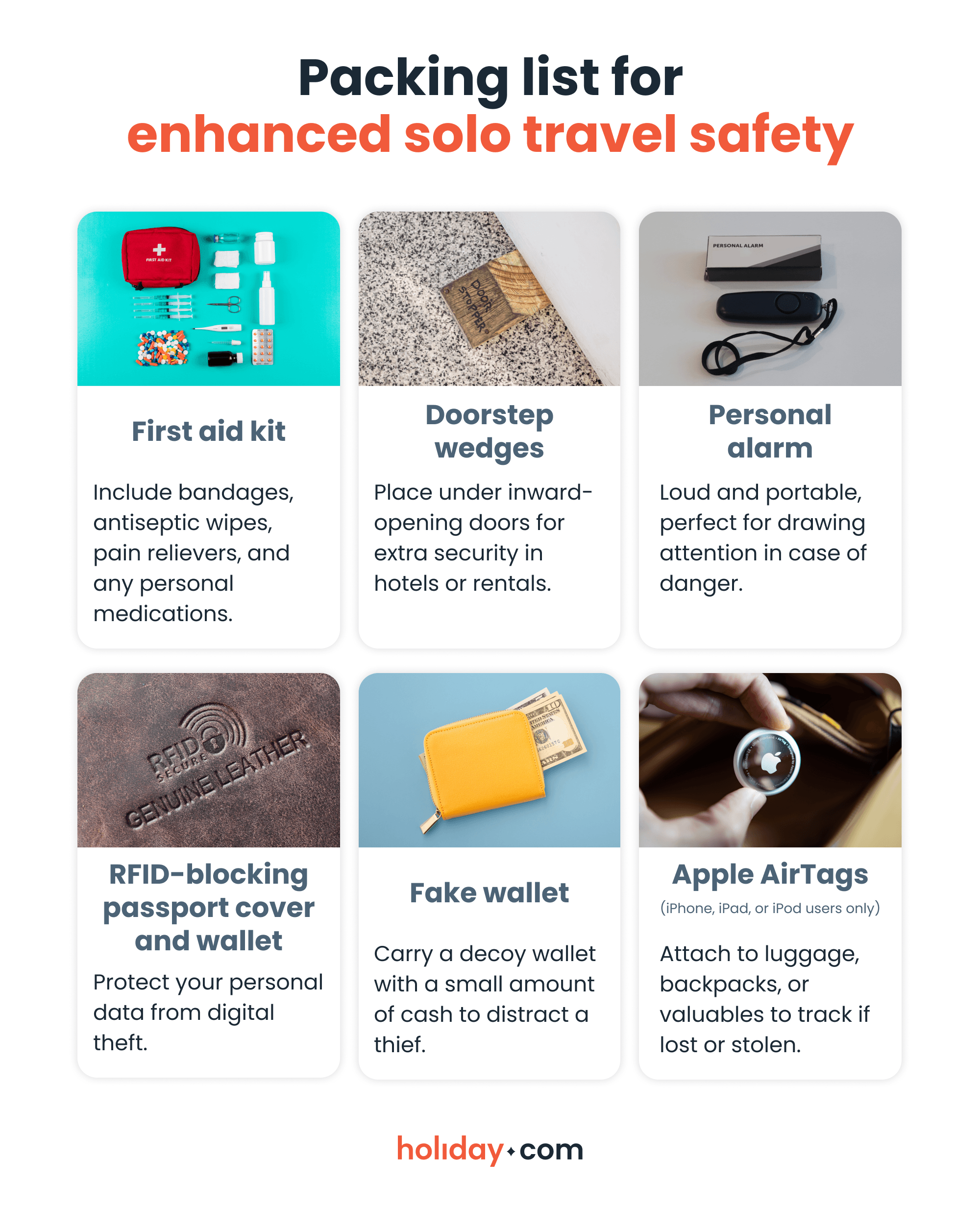
Beyond what you pack, planning ahead is key. These practical steps will help you prepare and be ready to handle unexpected situations that arise.
- Research your destination before booking anything. Reference multiple sources like government travel advisories, recent traveler reviews, and online forums to get a sense of the level of safety for your chosen destination. Once you select a destination, research safe neighborhoods (and areas to avoid) as well as the most reliable transportation options.
- Choose accommodation carefully. Book properties with plenty of recent reviews on trusted platforms like Booking.com or Google. Look for 24-hour reception, secure entry, lockers or safes, and a location near public transport or busy, well-lit areas. Use the Google Street View feature to explore the surrounding neighborhood before booking.
- Get travel insurance for your trip. For extra peace of mind, buy a policy to cover incidental costs like medical care, trip cancellations, lost baggage, and theft. Read the coverage details and save the insurer’s emergency contact number in your phone.
- Prepare digital copies of important documents. Scan your passport, ID, travel insurance, and tickets. Store the files on a cloud service like Google Drive or iCloud so you can access them if you lose your physical copies.
- Share your itinerary and location with someone you trust. Send a friend or family member your flight and accommodation details and travel schedule. Use apps like WhatsApp, Google Maps, or Apple’s “Find My” to share your real-time location. Update your trusted contact frequently so someone always knows where you are.
How can solo travelers get around safely?
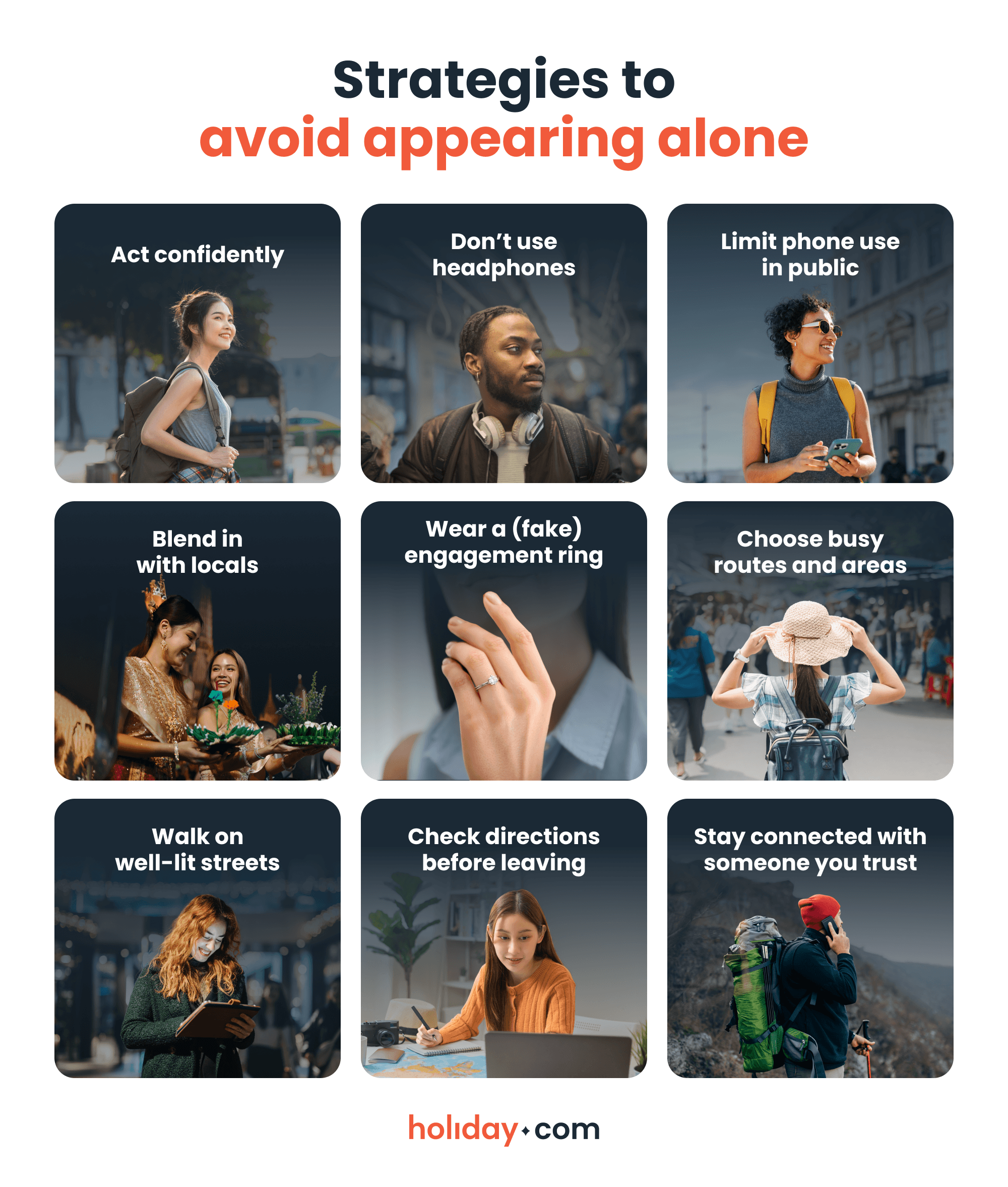
Making sure no one knows you’re alone is a top safety measure. Here are some strategies to avoid drawing unwanted attention:
Public transportation safety tips
Public transit can be tricky even in your own city, so navigating buses and subways abroad is bound to feel even tougher. Here’s how to avoid risky situations while getting around unfamiliar places:
- Plan your route ahead of time. Identify safe stops and note any neighborhoods or stations you should avoid before leaving your accommodation.
- Check how busy stations and routes are. Use Google Maps to view live data showing how crowded transit lines and nearby areas typically are.
- Choose strategic seating. Sit near other passengers, preferably close to the driver, conductor, or exit doors. Avoid empty carriages or isolated sections.
- Keep belongings safe. Hold bags in front of you and keep valuables out of sight to reduce the risk of theft.
Ride-sharing solo travel safety tips
Using ride-hailing apps is generally safer than public transportation, especially late at night or in areas that are poorly lit or less familiar. Even so, it’s important to take precautions to ensure your ride is secure:
- Wait in a safe pickup location. If possible, stay indoors or in a well-lit, busy area until the app confirms your driver has arrived instead of waiting outside alone.
- Verify the vehicle and driver. Check that the license plate, car make, model, and driver photo match the information shown in the app before getting into the car.
- Ask the driver to confirm your name. Instead of introducing yourself, ask them who they are picking up. The driver should be able to say your first name as shown in their app.
- Check the driver’s rating. Review the driver’s rating and recent reviews in the app. If the rating seems low and makes you uncomfortable, cancel the ride and request another driver.
- Sit in the back seat. This gives you more personal space and allows you to exit from either side of the vehicle in case of an unpleasant situation.
- Share your trip status. Use the app’s trip-sharing feature to let a trusted contact follow your ride in real time. Well-known ride-hailing services like Uber and Bolt include this feature, making it easier for someone to track your trip and ensure your safety.
- Follow the route on your phone. Using mobile data from an eSIM like holiday.com, you can monitor the route on Google Maps or a similar app. This helps you confirm the driver is on course and take timely action if needed.
- Stay alert during the ride. Remain aware of your surroundings throughout the trip.
Taxi safety tips
Most of the safety rules for ride-hailing apps also apply to traditional taxis. But here are additional practices that can help you stay protected when using taxis:
- Book reputably. Use an app or phone numbers from well-known, licensed taxi companies rather than hailing one on the street.
- Confirm the fare. Verify the metered price or agree on a fixed fare before getting in. This avoids misunderstandings and unpleasant situations.
- Use digital payments. Pay through the taxi’s app or another secure method when possible. This keeps large amounts of cash out of sight and provides a digital record of the trip.
Digital safety for solo travelers
Protecting your devices and personal data is just as important as your physical safety. Being connected while traveling alone is essential, but it comes with its own set of risks. Follow these digital safety tips to keep yourself guarded online.
- Don’t rely on public Wi-Fi. Cybercriminals often target public networks to steal personal data, passwords, and financial information. If you must use a public network, avoid logging into sensitive accounts, such as banking apps or online payment portals. Even hotel or airport Wi-Fi can expose your data.
- Stay connected with a travel eSIM. Unlike unsecure public Wi-Fi, an unlimited data eSIM like holiday.com connects to local data networks and keeps you online as long as there's a signal. You’ll have continuous access to live maps and the ability to check in with family or friends anytime, enhancing both your online and real-world safety while traveling solo.
- Be mindful about social sharing. Avoid posting your real-time location or detailed plans on social media to reduce the risk of unwanted attention. Share your whereabouts only with trusted contacts. If you’re active on social media, wait to post your adventures until after you’ve left the location.
HOT TIP
Download travel safety apps like Trip Whistle Global SOS or FEMA for access to emergency numbers, alerts, and SOS features in one place.
Financial safety for solo travelers
Traveling alone makes you more vulnerable to theft. Accidental loss on the go is also common. Here are a few pre-emptive strategies to avoid these scenarios and handle your funds safely.
- Bring limited cash. Don’t bring more cash than you need for the trip. A small amount of petty cash for daily expenses is enough for most destinations. If you must carry larger sums, divide it into separate pockets or bags so losing one stash won’t cost you everything. Use cards for bigger purchases to further reduce the risk of theft or loss.
- Be cautious with credit cards. Cards are harder to steal than cash, but you should still stay vigilant. Don’t let anyone handle your card away from you. For example, accompany a waiter if you must pay at the counter instead of the table. Use contactless payments when possible, as they reduce the risk of card skimming on corrupt or tampered terminals.
- Use the hotel safe. Store your passport, extra cash, and other valuables in a secure safe at your accommodation when not carrying them. Remember to double-check that you’ve locked the safe before leaving your room.
- Don’t use ATMs on the street. Opt for machines inside banks or well-lit, busy indoor areas. Also, check the ATM for tampering. Physically wiggle the card reader to ensure it’s not loose, examine the keypad for a spongy or raised overlay, and look for hidden cameras near the screen. Watch for mismatched colors, glue residues, or misaligned plastic, which are common signs of skimming devices. Always cover your PIN when entering it.
What should you do during unsafe situations?
Even with prudent planning, unexpected situations can happen while traveling solo. Knowing how to respond quickly and calmly can prevent these situations from turning into bigger problems.
How to stay safe if you get lost
An unplanned detour can become stressful if you’re alone in an unfamiliar place. Here’s what to do if you ever lose track of where you are:
- Stop and assess your surroundings. Avoid wandering aimlessly. Take a moment to observe streets, signs, and landmarks.
- Move to a safe, populated area. Enter a nearby café or hotel where you can take a moment to figure out your way back.
- Use your travel eSIM data for navigation. Check your location on Google Maps or request a ride through a trusted ride-hailing app.
- Ask for help wisely and carry a hotel card. If you have no internet, approach police, store or hotel staff, or taxi drivers and show your hotel card to ask for directions. Don’t reveal that you’re alone to anyone.
- Alert someone. Contact a friend or family member to update them on your situation.
How to stay safe if you reach your destination at night
While it’s best to avoid arriving at a new destination at night, transportation delays can happen. Here’s how to reach your accommodation safely and avoid unnecessary risks:
- Book transfers in advance. Arrange airport pickups or pre-book trusted ride-hailing or taxi services so you don’t have to search for transportation late at night.
- Use official transportation. Stick to authorized taxi stands or well-known ride-hailing apps like Uber or Bolt instead of accepting rides from strangers.
- Save important information. Write down your accommodation address, local emergency numbers, and key contacts. Keep copies on your phone as well for easy access.
- Share your estimated time of arrival. Let your accommodation and a trusted friend or family member know your updated arrival time and route if your travel plans change.
How to stay safe if you are a target of scammers
While all tourists can be at risk of scams, solo travelers are often more vulnerable. Here are some of the most common traveler scams you should be aware of:
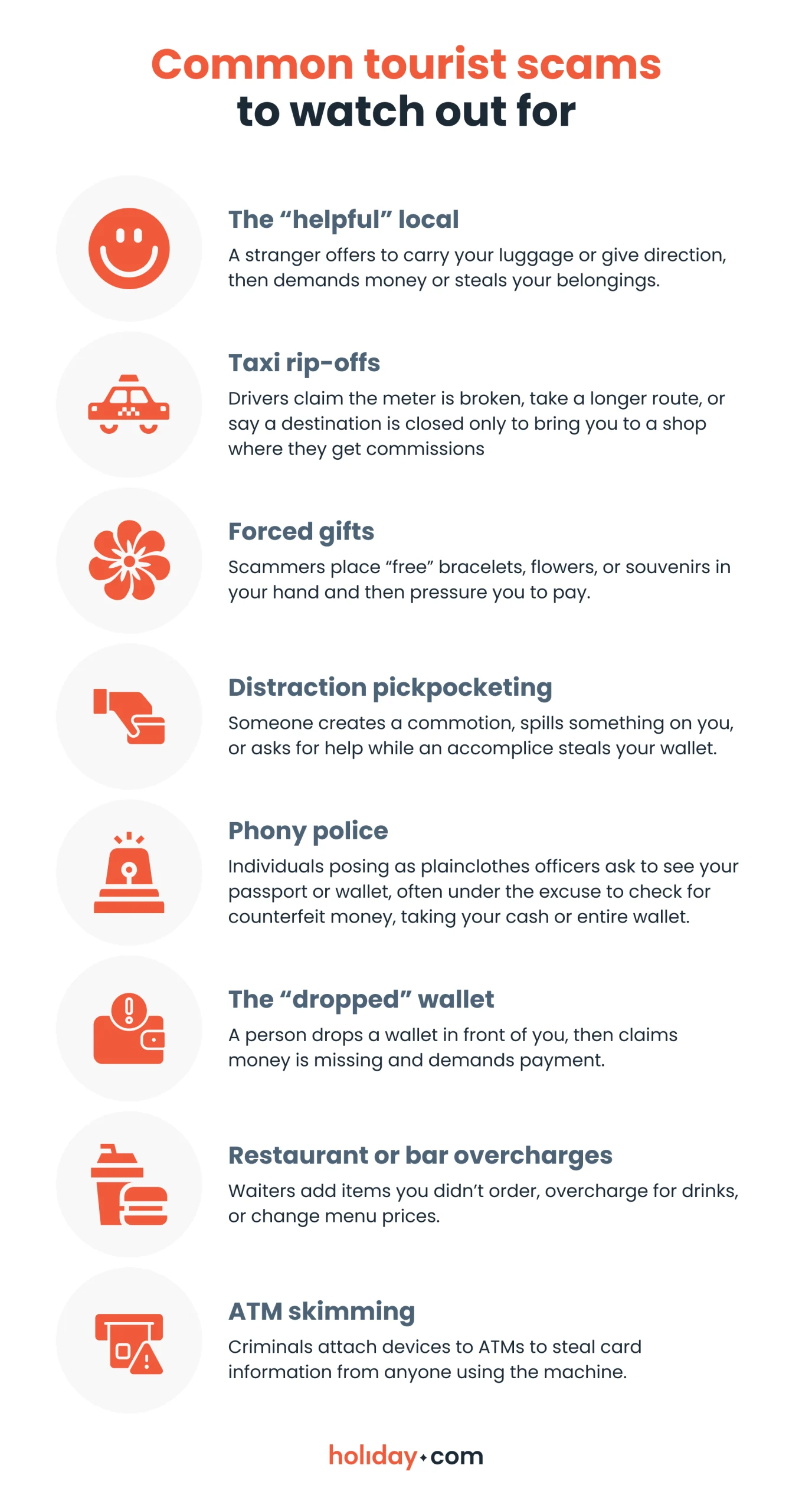
Tourist areas are often filled with scammers who prey on confused travelers. Being prepared can help you avoid unpleasant and potentially dangerous scenarios.
- Stay calm and walk away. Say “no” firmly and leave the situation immediately. Do not engage or worry about being rude. Scammers often rely on politeness and pressure to keep you involved.
- Don’t accept gifts. Items like bracelets, flowers, or small souvenirs are often used for scams where you are later pressured to pay.
- Don’t follow anyone to a private area. If someone insists on guiding you somewhere to “fix a problem” or “show you something,” refuse and move to a busy, public place.
- Secure your belongings. Keep bags in front of you and zipped, especially in crowded tourist spots, where distraction scams and pickpocketing are common.
Solo travel can be safe with the right preparation
Traveling alone is a rewarding experience as long as you take some precautions. From researching your destination and planning your trip to staying aware of your surroundings while exploring, our solo travel safety tips will help protect you at every stage of the journey.
Bookmark this guide so you have these solo safety travel tips within reach when traveling alone. For an extra layer of security and convenience, consider using a holiday.com travel eSIM on your next solo adventure. It keeps you connected with mobile data so you have access to vital apps when you need them most.
FAQ
-
Is solo travel risky?

Yes. Solo travel involves some risks, but careful planning and situational awareness can greatly improve your safety. Reliable internet access is also important so you can access important apps and services if needed. A travel eSIM from holiday.com connects to local cellular networks and provides unlimited data throughout your trip for a safer solo adventure.
-
How can a woman travel alone safely?
Choosing the right destination is crucial. Consult reputable resources like the Solo Female Travelers Safety Index to compare destinations. Research local customs and dress expectations, try to blend in, stay alert, and avoid risky areas at night.
-
What are the safest countries for solo travelers?
The safest countries for solo travelers include Iceland, Japan, Singapore, Norway, and Switzerland thanks to their low crime rates, strong public safety systems, and reliable infrastructure. Other popular options include New Zealand, Portugal, Denmark, and Slovenia, which are notorious for safe transportation and traveler-friendly environments.
-
What shouldn’t you do when traveling alone?
Avoid walking alone at night, oversharing travel plans, carrying all valuables in one place, depending on unreliable Wi-Fi, and falling for common tourist scams. Use both in-person and online safety measures to protect yourself while exploring solo.
About our author

You might also be interested in...
-
 Safety
1 in 5 visa search results are traps: How are users exposed?
Key findings Eighty-two percent of search results appearing in the top position are official, but this drops to 37% by the fourth result. Queries for Canada eTA are the riskiest: Only 55% of results ...
 Aishah Mustapha
 07.08.2026
 -
 Safety
SIM swapping fraud: How to protect your digital identity
When you’re in a foreign country, a sudden loss of mobile signal might seem like an international roaming glitch or a network issue. But it could be one of the red flags that someone has just hijack...
Aishah Mustapha
07.03.2026 -
 Safety
How to stay safe while traveling: A practical guide for 2026
Traveling puts you in unfamiliar environments where many things can go wrong. A stolen bag or a compromised digital account can quickly derail your trip. Many travelers assume safety means avoiding ri...
Sarah Kirton
05.26.2026 -
 Safety
Is hotel Wi-Fi safe? What you should know and real-world risks
Travelers commonly log into hotel Wi-Fi without giving a second thought to the potential security risks. Public sources of Wi-Fi, including at hotels, can be vulnerable to cyberattacks. This could exp...
Chené Murphy
05.26.2026 -
 Safety
Is airport Wi-Fi safe? Avoid common scams in 2026
When you’re stuck in an unexpected layover or need to book a ride to the hotel, connecting to the free airport Wi-Fi seems like the fastest solution. The truth is that public networks can put your d...
Ivana Shteriova
05.21.2026 -
 Safety
30+ common travel scams to watch out for abroad
Travel scams can be hard to spot. Scammers often operate out of sight, or greet you with a warm smile as they present an offer that sounds too good to miss. They take advantage of the fact that you’...
Aishah Mustapha
05.15.2026