



Staying in a hotel should feel relaxing and serve as a main highlight of your trip. But even the best properties can pose safety risks.
It’s not just theft that can turn the perfect getaway into a stressful ordeal. Cybercriminals can target unsecure Wi-Fi networks in an attempt to steal your personal data. The good news? A stress-free trip requires only a few simple precautions.
Whether you’re on a business trip or a family vacation, there are proven ways to stay protected in any hotel environment.
From choosing a safe property to protecting your digital data, there are precautions you can take to make your hotel stay safer. We’ll also show you how to avoid common scams and stay alert during your stay.
How to choose a safe hotel
Selecting the right hotel is the foundation of a safe stay. Consider these key pointers before confirming your booking.
Reviews and location
Reviews reveal how well a hotel manages safety and guest concerns, while location plays a vital role in your overall security.
- Safety feedback. Look for recent reviews mentioning responsive staff and well-lit hallways.
- Controlled access. Check for feedback about keycard entry or safe neighborhoods with nearby activity.
- Precautions for children. Families with small children should look for mentions of gated pools and safeguarded balconies.
Amenities that improve safety
Certain hotel features add an extra layer of protection.
- Staffed entry. Choose hotels offering 24-hour reception or staffed front desks.
- Floor security. Look for keycard access to elevators.
- Visible measures. Watch out for security in public areas and lifeguards at swimming pools.
What should you check when you arrive?
Once you enter your room, take a few minutes to confirm that the basic safety features work to ensure peace of mind for the rest of your stay.
Check doors and locks
Start with the main door and test all locking mechanisms.
- The main seal. Ensure the deadbolt and security latch function correctly and the door closes firmly.
- Windows and views. Confirm the peephole is clear and the windows lock properly.
- Balcony safety. Check that balcony doors are fully secured and out of children’s reach.
HOT TIP
Pack a small door wedge or portable door lock for added peace of mind, preventing the door from opening even if someone has a key.
Locate emergency exits
Knowing your exit routes helps you respond quickly in an emergency.
- Study the floor plan. Review the evacuation map on your door to find the nearest stairwell.
- Select backup routes. Identify an alternative exit and the location of fire alarms on your floor.
- Family planning. Show children the nearest exit and agree on a meeting point in case of an emergency.
How can you secure valuables?
You should still take steps to protect important items. A few basic precautions can go a long way.
Use hotel safes and personal locks
Use the in-room safe for passports, spare cash, jewelry, and important documents. Check that the safe works properly before you rely on it. If your room doesn't have a safe, ask the front desk about storage options, as some hotels provide a central safe at reception.
You can also use:
- A travel lock. Use a small lock on your luggage to deter unauthorized access.
- A portable cable lock. Attach it to your laptop or device to prevent easy removal.
- A locked suitcase. Keep valuables inside a locked case for added protection.
Keep electronics and documents secure
Follow these tips to keep your privacy:
- Keep devices out of sight. Store laptops, tablets, phones, and cameras when not in use.
- Avoid visible placement. Don’t leave valuable items near windows or in plain view.
- Organize important documents. Keep passports and travel papers together in one protected place for quick access.
- Set clear rules for children. Remind kids not to carry sensitive items or share room details.
- Protect room information. Encourage older children to keep room numbers private and avoid discussing travel plans with strangers.
How can you avoid scams?
Hotels attract many guests, making them a common setting for scams and impersonation attempts. Don’t let your guard down and keep an eye out for suspicious behavior.
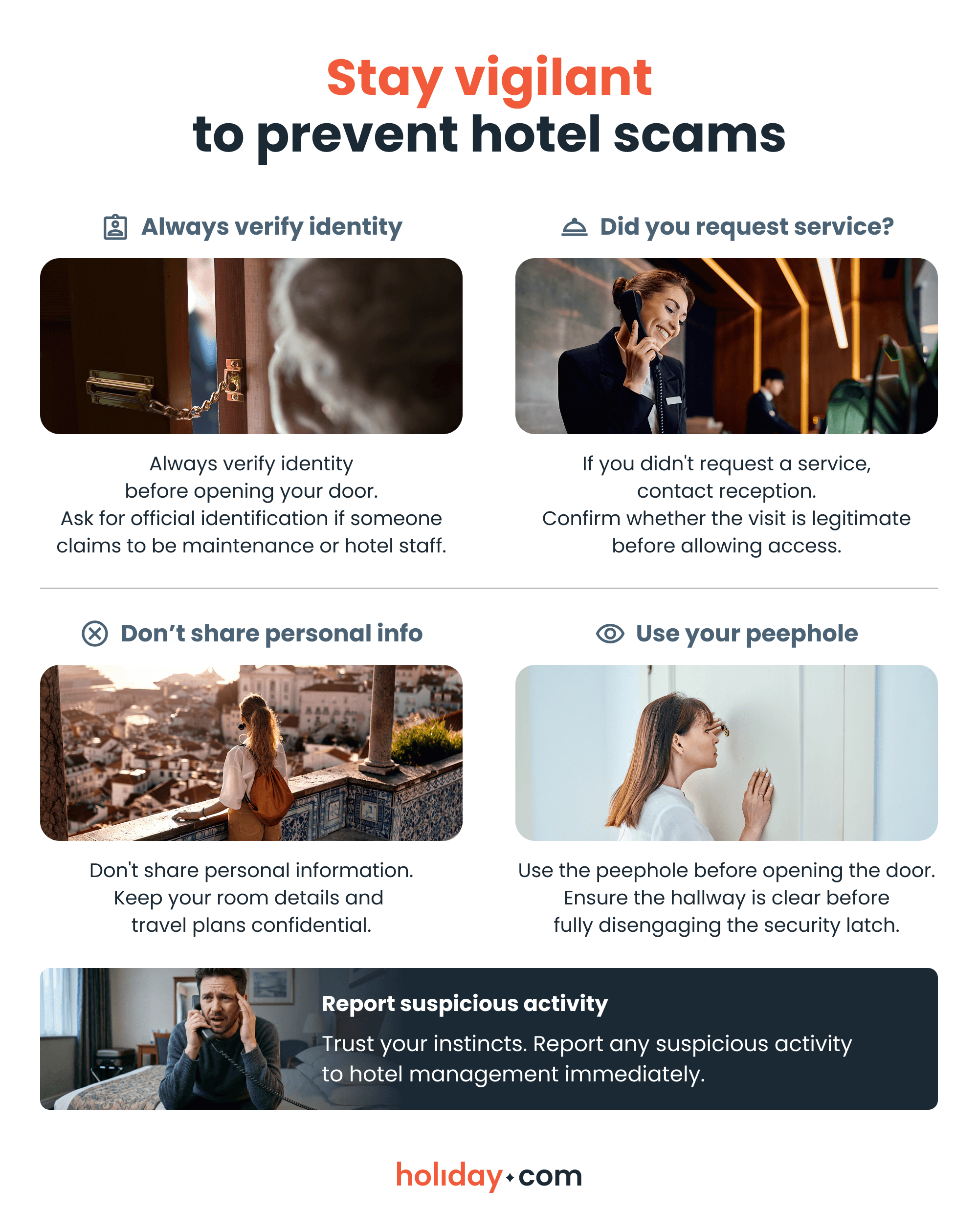
Beyond physical security, stay alert to administrative and communication scams.
- Look out for fake calls. Don’t share payment details with anyone claiming to be the front desk unless you call back using the official hotel number.
- Check your bill carefully. Review your charges and question any unexpected service fees before you check out.
If something feels unusual, contact the front desk directly using the official phone number in your room.
Protect your devices and digital data
Hotel Wi-Fi networks often lack strong encryption, meaning others on the same network may be able to see your activity. They could attempt to intercept your data or redirect you to fake login pages. You have a few options to prevent this from happening.
Choose the right connection
Using your mobile data is the safer option for banking and other sensitive tasks, as it connects you to a secure network. However, data roaming can get expensive if you’re traveling abroad.
A local SIM is a decent alternative that works just like your home SIM, but it requires navigating local carrier plans. You’ll also need to find a SIM kiosk once you arrive, and constant switching can damage the small chips.
If your phone supports it, a more convenient solution to local SIMs is a travel eSIM. You can set it up in minutes using your home Wi-Fi and activate it when you land. holiday.com partners with top carriers in 150+ destinations, which provide a safer way to browse and use your apps.
If you do find yourself using hotel Wi-Fi, add some extra protection:
- Enable a trusted VPN. This encrypts your traffic and masks your digital footprint from other guests.
- Verify the network name. Ask the front desk for the exact Wi-Fi network name (SSID). Cybercriminals sometimes create fake hotspots with similar names to trick guests into connecting.
HOT TIP
Avoid public USB charging ports in hotel lobbies. Besides power, a compromised station can also transfer data. Use your own wall charger or a power bank instead.
Secure your devices
Protect your devices with simple settings and security checks to minimize risk and keep your information safe throughout your stay.
- Device access. Lock your phone and devices with a strong passcode or biometric authentication, such as fingerprint or face recognition.
- Control automatic connections. Disable auto-join for public networks so your device doesn’t connect to risky hotspots without your permission.
- Keep your software up to date. Install the latest security patches to limit exposure to newly detected vulnerabilities.
- Limit data sharing. Turn off file sharing and AirDrop when using shared networks.
- Log out after each session. Always sign out of banking and work accounts once you finish using them.
- Check website security. Look for the padlock icon in your browser’s address bar before entering passwords or sensitive information.
What to do in an emergency
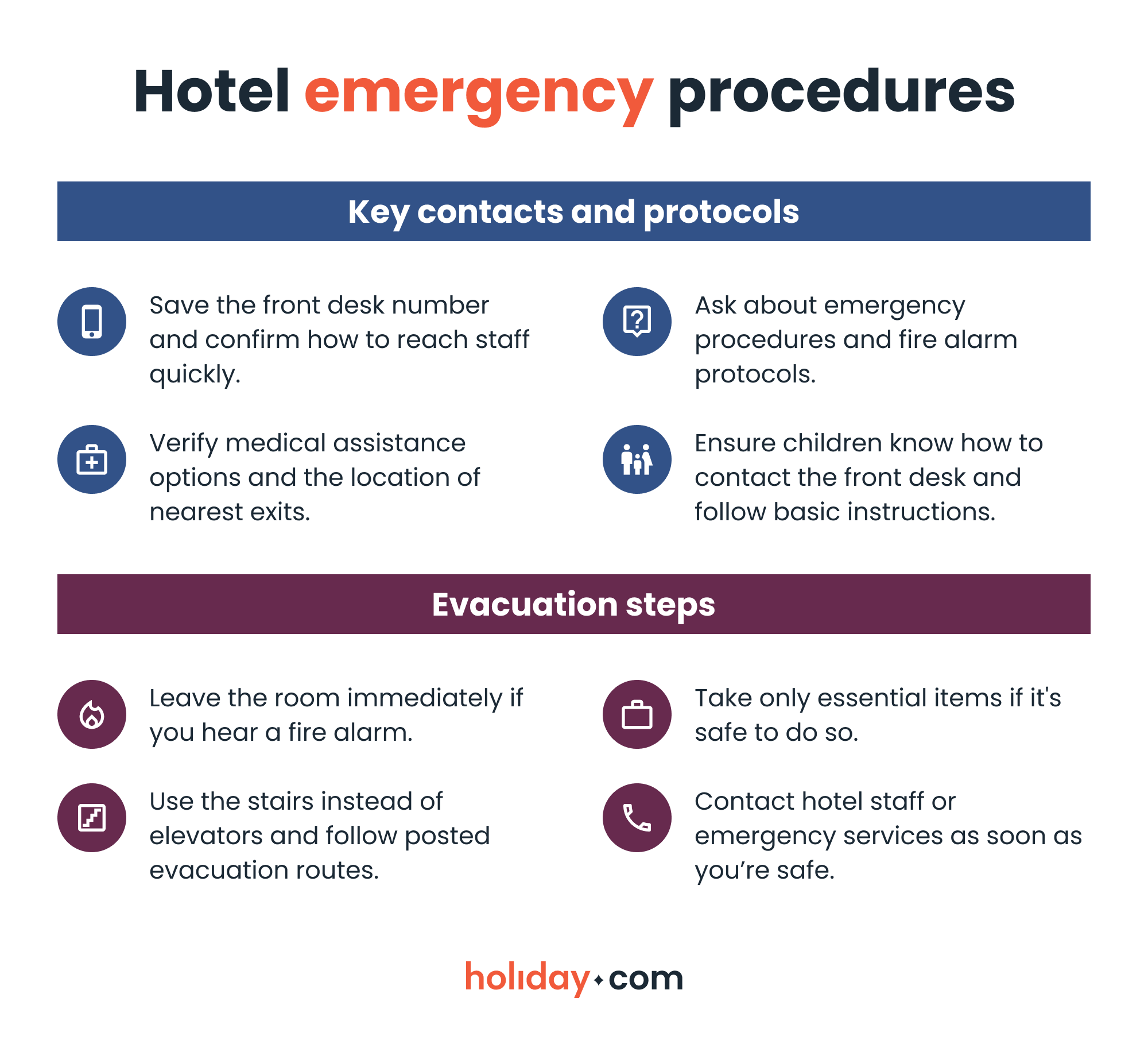
Preparing for an emergency takes only a few minutes but can make all the difference if a situation arises. Review the essential protocols and evacuation steps below so you know exactly how to respond.
HOT TIP
If you’re traveling internationally, research the local emergency services number (such as 112 in the EU or 911 in the U.S. and Canada) before your trip and save it to your contacts.
Master these hotel safety tips for your next getaway
Staying safe doesn’t require complicated steps. Combining basic awareness with good digital habits is all it takes to settle into your room without stress. With these straightforward precautions handled, you can focus on enjoying your trip.
FAQ
-
Can I make my hotel room safer with simple tools?

Yes. Portable door locks and door wedges can add an extra layer of protection. These lightweight, highly packable devices prevent the door from opening even if someone has a key.
-
Are hotel safes really secure?
Yes. While most room safes are secure for short-term storage, they aren’t entirely risk-free. Always set a unique code and ask to use the front desk safe for high-value items.
-
How can I avoid common hotel scams?
Verify anyone claiming to be staff before opening your door and always contact the front desk directly if you receive unexpected requests for payment or personal details. At checkout, review your bill in detail for unauthorized service fees.
-
How can I protect myself from hotel Wi-Fi hacks?
Avoid using public Wi-Fi for sensitive logins. Use your mobile data or a travel eSIM for banking and private tasks. If you must connect to the hotel's network, turn on a trusted VPN to encrypt your data.
-
What’s the best way to respond in a hotel emergency?
Stay calm and follow hotel instructions. Contact the front desk or local emergency services once you are safe and establish a designated meeting point outside the building if traveling with a group.
-
What should solo travelers especially watch out for?
Solo travelers should be aware of room placement and avoid ground-floor rooms. Keep room numbers private and don’t share travel details with strangers. If you arrive late, notify hotel staff.
About our author

You might also be interested in...
-
 Safety
1 in 5 visa search results are traps: How are users exposed?
Key findings Eighty-two percent of search results appearing in the top position are official, but this drops to 37% by the fourth result. Queries for Canada eTA are the riskiest: Only 55% of results ...
 Aishah Mustapha
 07.08.2026
 -
 Safety
SIM swapping fraud: How to protect your digital identity
When you’re in a foreign country, a sudden loss of mobile signal might seem like an international roaming glitch or a network issue. But it could be one of the red flags that someone has just hijack...
Aishah Mustapha
07.03.2026 -
 Safety
How to stay safe while traveling: A practical guide for 2026
Traveling puts you in unfamiliar environments where many things can go wrong. A stolen bag or a compromised digital account can quickly derail your trip. Many travelers assume safety means avoiding ri...
Sarah Kirton
05.26.2026 -
 Safety
Is hotel Wi-Fi safe? What you should know and real-world risks
Travelers commonly log into hotel Wi-Fi without giving a second thought to the potential security risks. Public sources of Wi-Fi, including at hotels, can be vulnerable to cyberattacks. This could exp...
Chené Murphy
05.26.2026 -
 Safety
Is airport Wi-Fi safe? Avoid common scams in 2026
When you’re stuck in an unexpected layover or need to book a ride to the hotel, connecting to the free airport Wi-Fi seems like the fastest solution. The truth is that public networks can put your d...
Ivana Shteriova
05.21.2026 -
 Safety
30+ common travel scams to watch out for abroad
Travel scams can be hard to spot. Scammers often operate out of sight, or greet you with a warm smile as they present an offer that sounds too good to miss. They take advantage of the fact that you’...
Aishah Mustapha
05.15.2026