


There are two traps to watch out for when packing for a beach trip, and both can result in annoying added expenses. If you underpack and forget something, you could end up paying a premium to replace it at a resort gift shop. On the other hand, overpacking can result in overweight luggage fees at the airport.
Not only does a poorly packed bag cost time and money, but it also causes much stress. The mental load of organizing a trip, whether for yourself or an entire family, can be exhausting. Did you pack enough sunscreen? Do you need three pairs of sandals or just one? These questions can be a distracting burden when you’re trying to relax.
Stop guessing what goes in your suitcase. We’ve stripped away the fluff to give you a straightforward and strategic way to pack for your beach vacation. With our tips, you’ll know how much to pack for any length of trip. Whether you're a solo minimalist or a parent packing for three, this guide ensures you bring exactly what you need and nothing you don't.
Beach vacation checklist
Your beach escape starts here. Use this checklist to lock in the essentials and skip the guesswork.
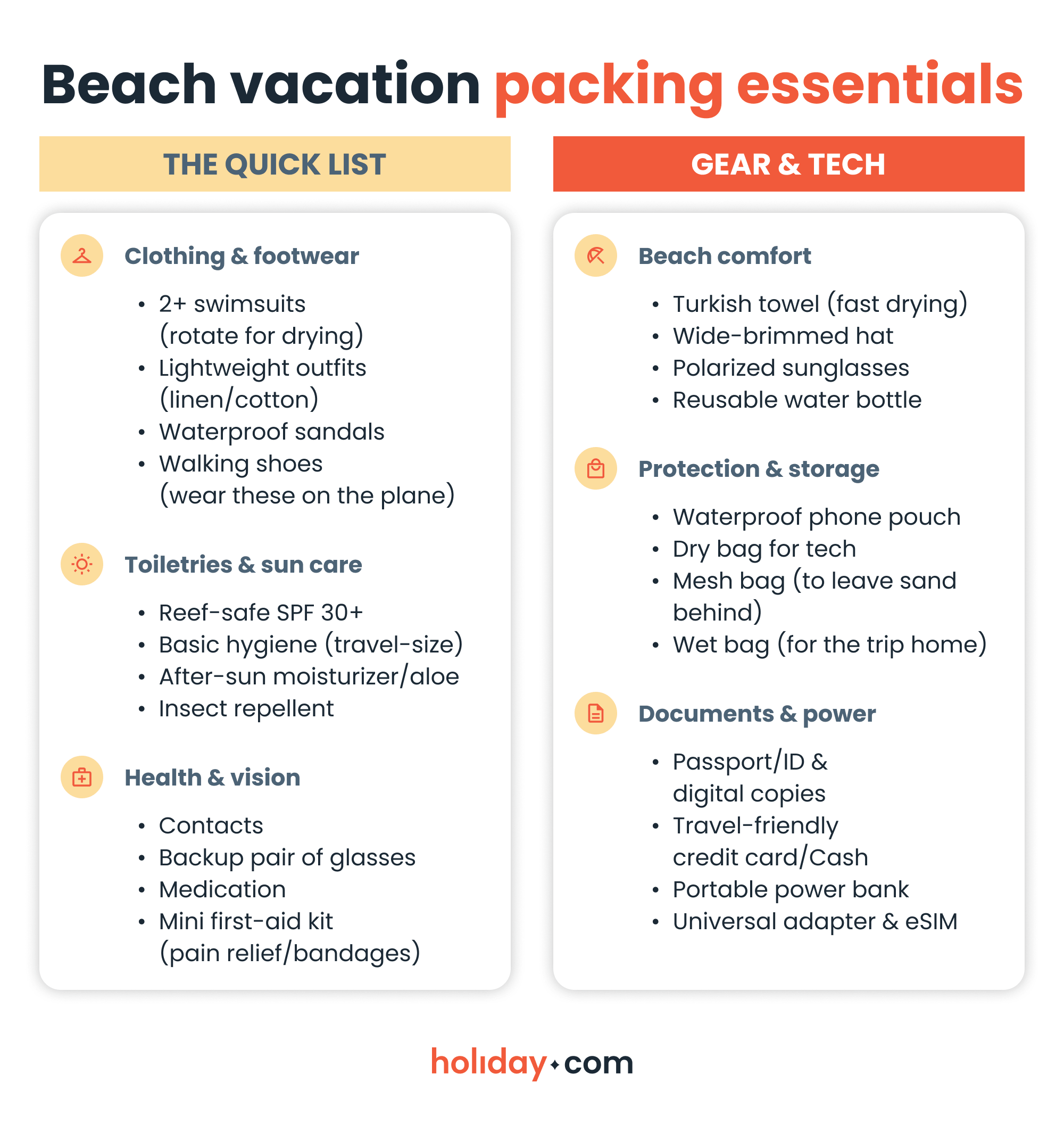
What should I pack for the beach?
Choosing what to wear on your beach vacation is probably the trickiest part of the packing process. Pack for transitions so you can move from a morning swim to a boardwalk lunch without a full wardrobe change. Here are some tried-and-true tips we swear by.
Swimwear and cover-ups
- Rotate your suits. Pack at least two swimsuits so you always have a dry one ready.
- Prioritize quality. Choose quick-dry fabrics that resist stretching from salt and chlorine.
- Master the transition. Bring a sarong or oversized shirt to move from the water to your favorite restaurant.
Daytime and evening outfits
- Beat the heat. Stick to linen or cotton fabrics to stay cool in high humidity.
- Keep it loose. Pack breathable shorts and tanks to maximize airflow during the day.
- Mix and match. Use a neutral color palette with a few basics like sundresses or chinos that go with anything. Take a lightweight jacket for cooler evenings.
The best footwear for beach terrain
- Protect your feet. Use sturdy waterproof sandals for rocky shores or flip flops for hot sand.
- Stay active. Wear comfortable sneakers on travel days and for long walks into town.
- Dress it up. Pack one pair of dressy sandals or low wedges for a polished evening look.
Don’t forget toiletries, health, and vision care
Salt water and sand are harsh on your skin and eyes. Most hotels provide generic soap, so don’t waste space on basics you’ll find in the bathroom. Instead, focus on specialized items that actually protect your health and comfort.
| Category | Must-pack items | Why it’s essential |
| Skin & sun | Reef-safe SPF 30+, aloe, and bug spray | Protects the skin (as well as the ocean) and repairs skin after UV exposure |
| Vision care | Daily contacts, extra sets, and backup glasses | Sand damages reusable contacts |
| Family medication | Pain meds, thermometer, and ear drops | Avoids resort prices and late-night pharmacy hunts |
HOT TIP
Don’t risk paying top dollar for limited contact lens supplies at beach shops. Bring a travel-size bottle of solution in your carry-on instead.
What are beach essentials for kids and babies?
Happy kids make for a happy vacation. It’s that simple. Smart packing is your best defense against mid-day meltdowns and expensive resort-shop runs.
Sun protection is non-negotiable
Don’t rely too much on sunscreen alone, which can wash off or provide uneven coverage. Layer your protection with these three items:
- UPF 50+ rash guards. These significantly reduce how often you need to reapply sunscreen to children’s backs and shoulders.
- Legionnaire-style hats. Choose hats with a long back flap to protect the delicate skin on their necks and ears.
- Baby-safe mineral sunscreen. Stick to physical blockers (zinc or titanium) that are gentler on sensitive skin and less likely to sting their eyes.
Pack more swimwear
Kids hate putting on damp swimsuits, and nothing ruins a morning faster than a struggle with a cold, soggy layer.
- The 3-suit rule. Pack three swimsuits per child. This ensures you always have one you’re wearing, one you’re drying, and one clean backup ready to go.
- Chafe protection. Extra suits help you rotate frequently, which prevents the painful salt-and-sand chafing that leads to evening crankiness.
Prevent meltdowns
A beach day is a sensory overload for a child, so bring a slice of home with you.
- Bring familiar snacks. Local beach shops may only have spicy or unfamiliar snacks. Pack a few granola bars or crackers to keep blood sugar stable.
- Employ the “Dry Set” strategy. Always keep one lightweight change of clothes in a waterproof bag inside your beach tote. It’s a lifesaver if a nap happens or the temperature drops.
- Get polarized sunglasses with straps. Kids' eyes are sensitive to glare, but they’ll lose standard frames in the waves. A floating strap keeps them secure.
Sand and ocean safety
Protecting little feet and skin makes the transition from the water to the car or hotel much smoother.
- Sturdy water shoes. These protect small feet from jagged shells and sand that can reach blistering temperatures.
- The baby powder miracle. This is a pro tip you'll use every single day. Sprinkle baby powder on sandy skin before leaving the beach. It wicks away the moisture and allows you to brush the sand off instantly.
- Compact pop-up tents. For babies, a small UV-rated tent provides a vital nap spot and a break from the direct glare of the sun.
- Flotation aids. Arm bands, swim vests, or floaties give extra confidence for little swimmers and peace of mind for parents.
Documents, tech, and staying connected
While we rely heavily on our phones, technology isn’t always foolproof.
Travel documents
Keep digital copies of your passport and visas in a secure cloud folder, in case the physical copies are lost or stolen. Similarly, always have a paper backup of your itinerary and important documents. If your phone dies or Wi-Fi is spotty, the paper backup can save time and stress.
Beach connections and tech
If you’re bringing electronic devices to the beach, here are a few tips to consider in order to keep your digital life running smoothly.
Fight the battery drain. Pack a high-capacity power bank to combat the way high heat and constant photos kill your charge. You won't have to leave the beach to find a wall outlet.
Seal your ports. Use waterproof tech pouches to block out fine sand and salt mist. This prevents invisible corrosion from ruining your charging ports or speakers. These seals are especially vital for boat days, where constant sea spray and humid air can damage your phone even if it stays in your bag.
Stash emergency cash. Slide some local currency inside your phone case for a just-in-case cash fund. It’s a lifesaver when remote beach vendors don't accept cards or digital wallets.
Save on data fees. Use a travel eSIM like holiday.com if you’re planning on streaming music or video calling from the beach. It’s the most convenient way to get mobile data without paying for roaming fees or dealing with a physical SIM that you could lose in the sand.
HOT TIP
Waterproof pouches are great for the sand, but they can trap moisture when you move from an 86°F (30°C) beach into a frosty 65°F (18°C) air-conditioned hotel room. This can damage camera lenses and internal hardware. Open your tech bags as soon as you’re back to let everything breathe.
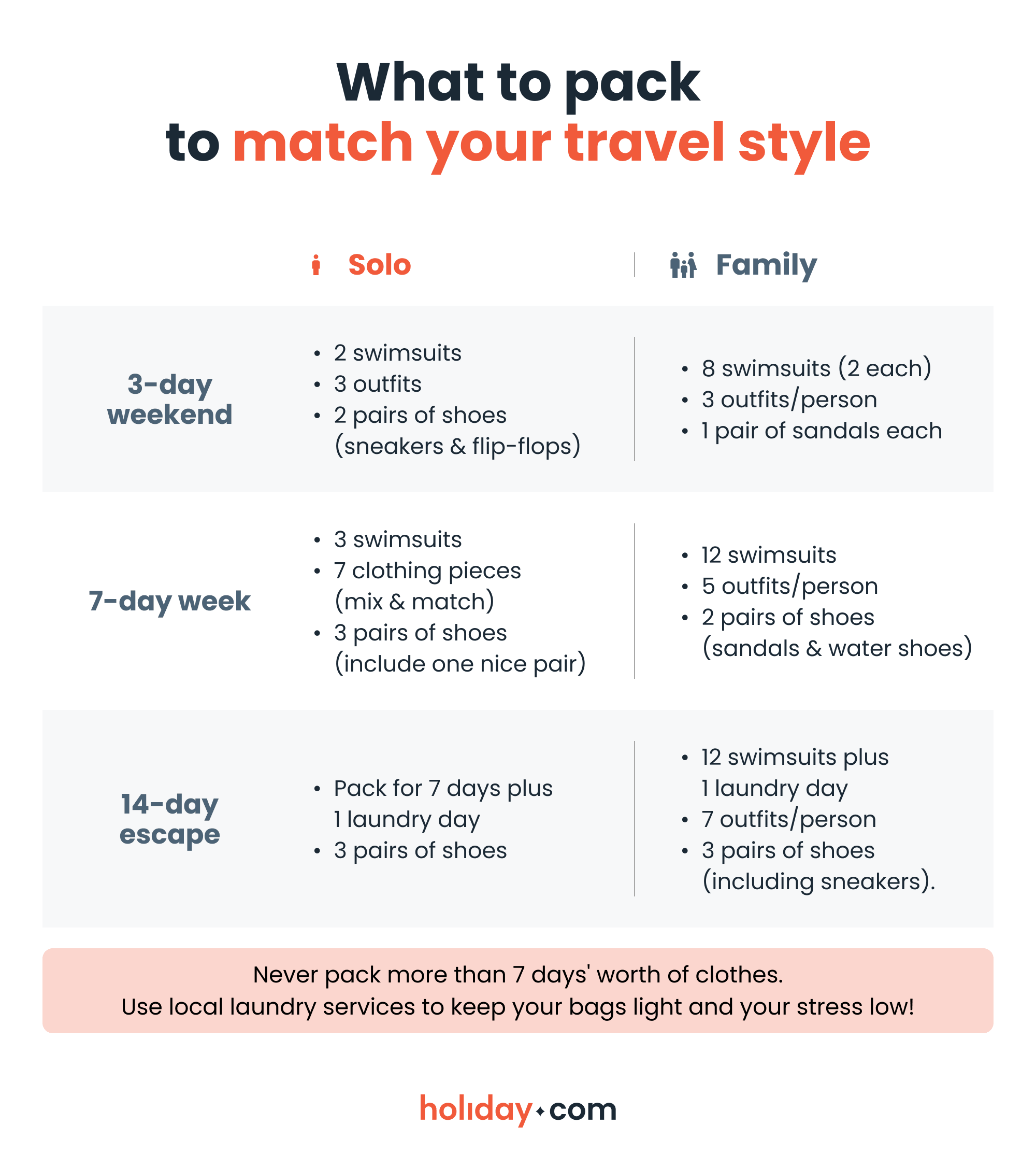
How much to pack for a beach trip
Overpacking is the fastest way to turn a relaxing trip into a logistical nightmare. You don’t need a fresh outfit for every hour. You can re-wear denim and linen items, but you’ll definitely want fresh layers closer to your skin.
Your final suitcase check
The difference between a smooth getaway and a rough landing often comes down to the last five minutes you spend on your suitcase.
Don’t forget these items
Most travelers remember the big stuff but get caught off guard by the small essentials. Check your bag for these four overlooked items:
- A dedicated laundry bag. Don't let salty, sandy clothes sit next to your fresh ones. A simple mesh bag keeps the beach smell from taking over your suitcase.
- SPF lip balm. Lips burn faster than shoulders, but most people skip the protection. Pack a dedicated balm to avoid a painful sunburned smile on day two.
- A hair mask or leave-in conditioner. Saltwater damages hair texture. A travel-sized treatment helps you avoid beach frizz and keeps things manageable for dinner.
- Rehydration salts or electrolytes. Keep a few packets in your bag to bounce back from heat exhaustion or a long day in the waves.
Leave these items behind
Don't waste space on items that'll end up sitting in your suitcase. If it's on this list, leave it on the shelf:
- Bulky beach towels. Most hotels provide these. Even if they don't, a thick cotton towel takes forever to dry and weighs a ton. Stick to a thin microfiber version instead.
- Flashy jewelry. Sand is abrasive and the ocean is a graveyard for loose rings. Leave the expensive stuff at home.
- Multiple “just-in-case” shoes. You’ll spend most of your time in flip-flops or barefoot. Bring one pair of dressy sandals for evenings and one pair of comfortable walking shoes for travel.
The final zip before your beach trip
The perfect beach vacation isn't about how much you bring. It’s about how little you have to worry about. Pack smart and stick to the essentials so you aren’t overburdened on your trip.
With the stress of packing off your shoulders, you’re free to soak up the moments that matter. Whether it’s watching your kids discover the ocean for the first time or relaxing in a hammock, everything you need fits right in your bag.
FAQ
-
What's the most forgotten item when packing for a beach vacation?

Some of the most forgotten items include SPF lip balm and a dedicated hair treatment. Most people remember body sunscreen but forget that lips burn easily and salt ruins hair texture.
-
What are the biggest packing mistakes to avoid?
Many people overpack for trips and bring unnecessary items like extra shoes and heavy cotton towels. These items take up the most volume and weight and you’ll likely never need them.
-
How do I adjust my packing for a 10- or 14-day trip?
Pack for one week and use a laundromat, local service, or hotel amenities to refresh your basics halfway through.
-
How do I protect my electronics from sand and salt?
Beyond a waterproof case, keep your devices in a sealed dry bag when not in use. Salt mist is corrosive and can damage charging ports over time.
-
What's the best way to pack light for a beach holiday?
Choose a neutral color palette so you can mix and match every top with every bottom. Wear your heaviest shoes on the plane and leave the backup outfits at home.
-
Should I get a travel eSIM for a beach vacation?
Absolutely! A travel eSIM is the smartest way to stay connected without the hassle of finding a local SIM store and a cheaper alternative to expensive home carrier roaming fees. You can activate your connection before you land.
About our author

You might also be interested in...
-
 Travel
International travel packing list: Never forget a thing
There are always two types of people: some love packing for an international trip and have a whole system worked out. Others might feel anxious about the packing process and dread pulling out their su...
 Ivana Shteriova
 06.24.2026
 -
 Travel
The essential international travel checklist for 2026
Juggling pre-trip logistics like travel documents, banking, and security can make planning a trip feel like a full-time job. Even the most exciting journey can turn stressful when important details sl...
Sarah Kirton
06.03.2026 -
 Travel
19 best girls trip destinations for all travel styles
Somewhere between starting the group chat and comparing different budgets, planning a girls trip can turn from excitement to frustration. One friend wants beaches, another wants culture, someone insis...
Ana Marković
06.03.2026 -
 Travel
21 best honeymoon destinations for every travel style and budget
Planning a honeymoon should be a joyful coda to your wedding, but with a world of possibilities, narrowing it down can feel like another logistical challenge. There’s no one best honeymoon destinati...
Dawn Prevete
05.28.2026 -
 Travel
Family travel tips for stress-free vacations with kids
You can color-code your schedule all you want, but a good family vacation hinges on how well you handle the inevitable curveballs. Anticipating and preparing for any potential disruption is impossible...
Dawn Prevete
05.21.2026 -
 Travel
16 travel tips for frequent flyers: Save time and money in 2026
Waiting in long security lines and dealing with delayed flights can turn even a routine trip into an irritating experience. Without a structured system, these recurring issues waste time and increase ...
Ana Marković
05.21.2026