


Juggling pre-trip logistics like travel documents, banking, and security can make planning a trip feel like a full-time job. Even the most exciting journey can turn stressful when important details slip through the cracks.
Losing access to a key document or landing without internet access to navigate to your hotel can instantly ruin a carefully planned itinerary. Fixing these issues on the go is difficult, but a little preparation before you leave ensures peace of mind.
We’ll show you exactly what you need to organize (right down to tips about how to prepare for emergencies and getting your home ready) and when to do it. Stay organized and keep everything running smoothly with our checklist.
Are your travel documents in order?
Make sure your travel documents are up to date. A review now can save you from major disruptions later.
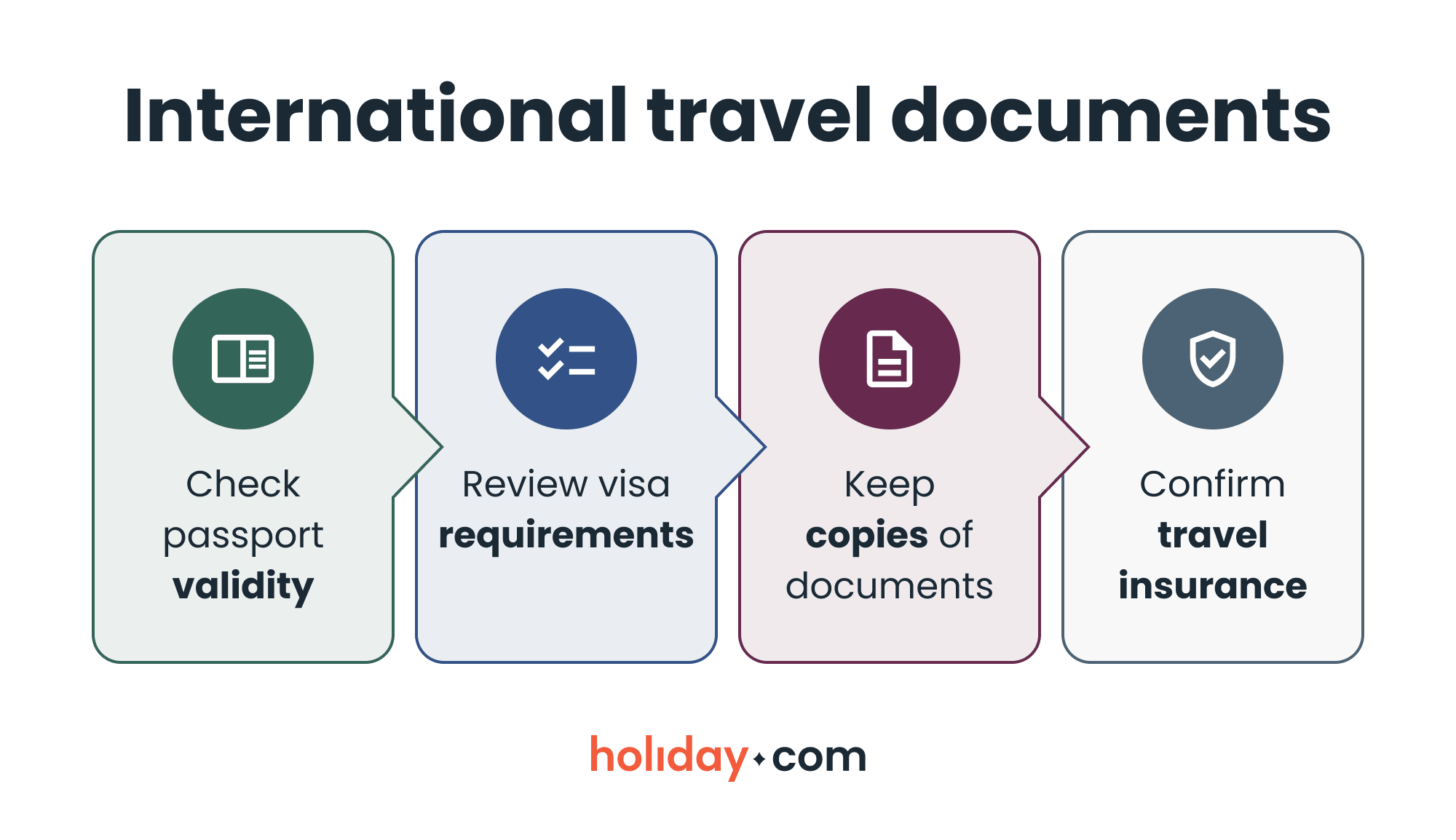
- Confirm your passport is valid. Make sure it doesn’t expire within six months of your return date and that it has enough blank pages for entry stamps. If it doesn’t meet these requirements, renew it early to avoid delays or boarding issues.
- Review visa and entry requirements. Find out if you need a visa, an eVisa, or pre-approval, and review any additional requirements such as proof of onward travel or accommodation. Always verify the latest rules through official government sources, as requirements can change.
- Prepare copies of your key documents. Create digital and physical copies of your passport, visa, travel insurance, and bookings. Store digital versions on your phone or cloud storage and keep printed copies separate from the originals. This makes it easier to recover information if anything gets lost.
- Review your travel insurance. Check that it covers your destination and planned activities. Ensure you can access your policy details and emergency contact numbers if you need them.
Is your banking set up for international payments?
If your banking isn’t set up before you travel, you might experience issues using your cards in other countries. Make sure you can access your funds when you need them.
- Notify your bank of your travel plans. Update your travel details in your banking app or online account ahead of your trip. This helps your bank recognize international transactions and reduces the risk of your bank blocking your card.
- Confirm your cards work internationally. Check whether your debit and credit cards allow international purchases and ATM withdrawals. Also make sure you’re aware of any bank charges for using your card in other countries.
- Set up digital wallets for payments. Add your cards to digital wallets like Apple Pay or Google Pay before you depart. This provides a secure, contactless payment option on your phone, which is essential if you forget or misplace your physical card.
- Arrange a backup payment method. Prepare a second payment option in case your primary card is declined or lost. Keep this backup in a separate location from your main wallet to ensure you are never left without funds.
- Understand foreign transaction fees. Review your bank’s fee structure. Confirm whether it charges currency conversion fees or ATM withdrawal fees so you can plan your daily spending with clarity.
How to stay connected while traveling
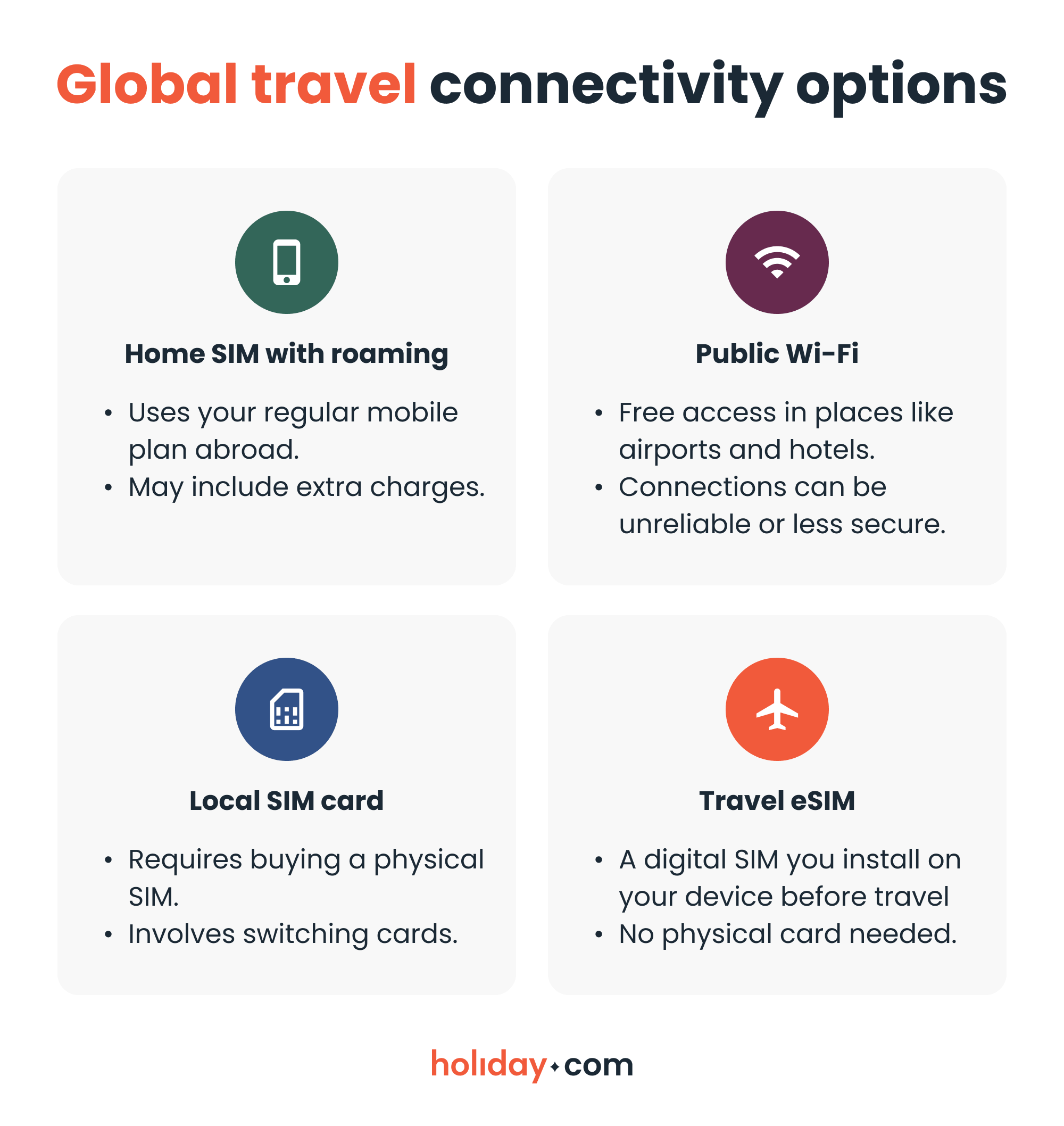
You can stay connected abroad using public Wi-Fi, your home SIM with roaming, a local SIM card, or an eSIM. Each option has its benefits and drawbacks when it comes to convenience, cost, reliability, and overall flexibility. Let’s take a closer look.
Why traditional options can feel limiting
- Public Wi-Fi. Hotels, airports, coworking spaces, and cafes all offer open networks. While these connections are handy, they’re unreliable and can potentially expose you to security risks.
- Home SIM with data roaming. This is convenient as you don't need to swap cards. However, roaming fees can add up, especially for data-heavy activities like navigation. Check the carrier’s rates before you go, and consider setting data limits or alerts to avoid surprises.
- Local SIM card. Buying a SIM in your destination country often gives you cheaper rates and better local coverage. But you’ll have to visit a store, show identification, choose a plan, and swap your physical SIM card. This process takes time, so you should factor this into your itinerary. If you need to top up during your trip, you’ll have to find another SIM kiosk.
Why choose a travel eSIM
An embedded SIM (eSIM) gives you access to the internet without a physical SIM card. You’ll avoid public Wi-Fi altogether and connect as soon as you land. You can install the eSIM from home and activate it when you arrive.
In most cases, you won’t be able to use your travel eSIM connection to make calls or send SMS, but you can stay connected with friends and family through internet-based apps like Messenger or WhatsApp. Some travel solutions, like holiday.com, offer both unlimited data and flexible data bundles.
Prepare your devices for a smooth landing
Once you choose your connection method, take a few extra steps to ensure your devices are ready at touchdown:
- Download offline maps and essential documents.
- Update your apps and operating system.
- Confirm your mobile data settings before departure.
Are your accounts and data secure?
When you’re abroad, your devices become your lifeline. They hold your payments, bookings, documents, and personal information. Protecting them with a few simple steps before you leave is essential.
- Enable strong passcodes or biometrics. Lock your phone and laptop with a strong passcode, and enable biometric authentication, such as Face ID or fingerprint access. This adds a critical layer of protection if your device gets lost or stolen.
- Turn on two-factor authentication (2FA). Enable 2FA on your banking and essential travel accounts. Extra verification helps protect your data even if someone knows your password.
- Back up important data. Back up your photos, contacts, documents, and key files. Use secure cloud storage so you can recover your data if you lose or damage your device while traveling.
- Review privacy and security settings. Check your app permissions and sharing options. Limit access where possible and remove any unused apps to reduce potential security risks.
Home preparations
Securing your home is just as important as organizing your luggage. Use the list below to ensure everything is ready before you head to the airport.
- Pause deliveries and don’t let mail pile up while you’re away.
- Lock doors and windows, put valuables in a safe place, and activate security systems.
- Turn off non-essential utilities and set timers if needed.
HOT TIP
Setting smart timers for your lights is a simple way to make your home look occupied and deter unwanted attention while you’re away.
Confirm logistics and emergency readiness
To avoid unexpected travel issues and the last-minute rush, go over the basics one more time.
- Recheck flight details. Review your departure times and travel dates before you leave. Save your boarding passes offline on your device so you can access them without an internet connection.
- Plan airport arrival timing. Allow extra time for check-in, security, passport control, and possible delays.
- Save emergency contacts and local numbers. Store important contacts on your phone, including local emergency services and your accommodation details.
The complete pre-departure timeline
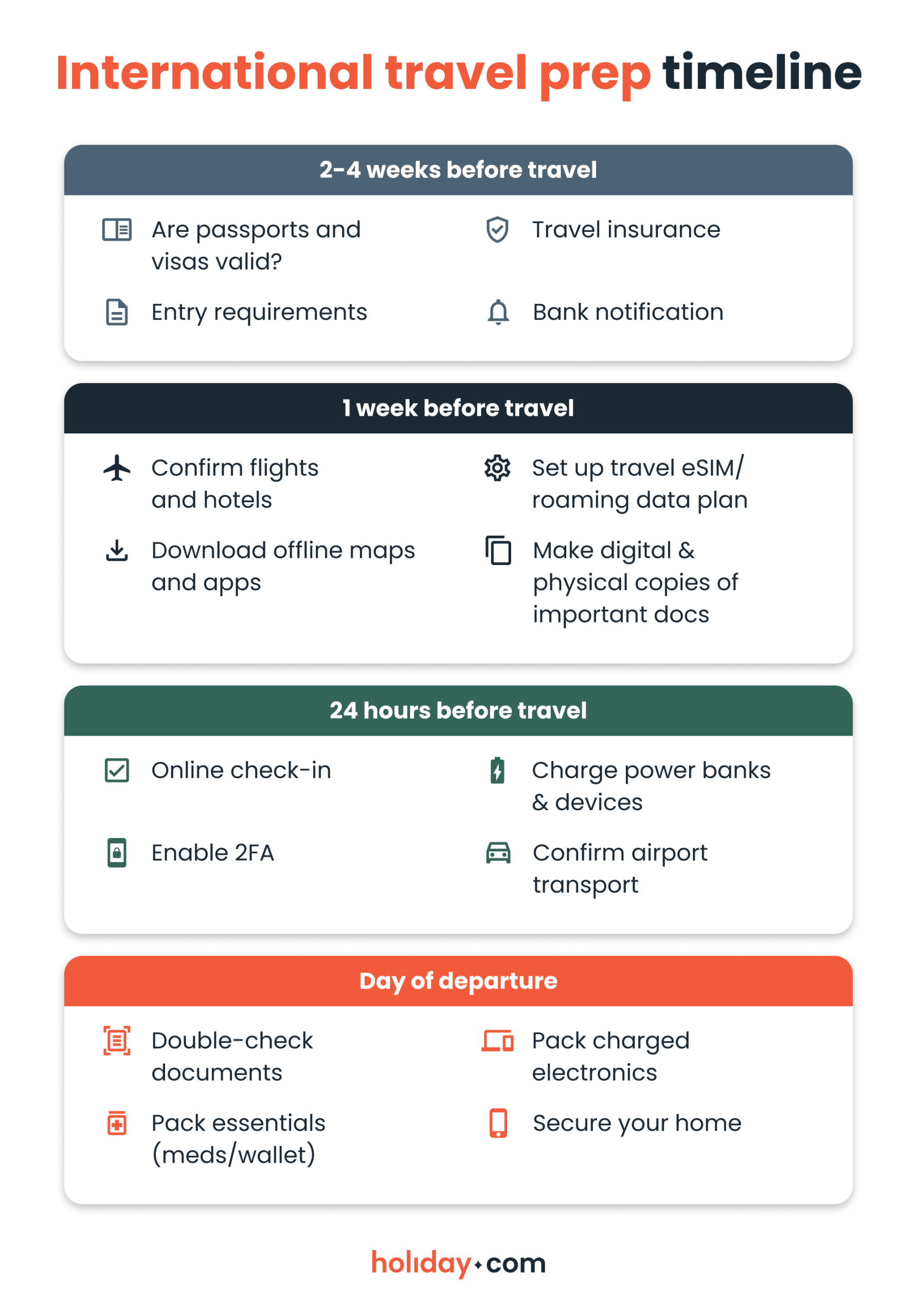
Most of this comes down to common sense and good organizational skills, but keeping track of everything can still feel overwhelming. Use our preparation timeline as a quick reference to save time.
Stress-free travel starts with a smart checklist
Planning ahead removes most of the friction from international travel. Using a clear checklist helps you stay organized and reduces the risk of preventable hiccups before you leave and throughout your stay.
Bookmark this guide and return to it before your next trip so you can travel smart on every occasion.
FAQ
-
When should I start preparing for international travel?

Start at least two to four weeks before departure. This timeframe ensures you have enough buffer to renew documents, double-check entry requirements, and set up internet access.
-
Do I need travel insurance for international trips?
Yes, travel insurance protects you from unexpected medical costs, trip cancellations, lost baggage, and other disruptions. Always verify that your policy covers your destination and travel dates.
-
How can I avoid mobile roaming charges abroad?
Turn off data roaming on your home plan and use a travel-friendly solution, such as a local SIM, Wi-Fi, or a travel eSIM like holiday.com.
-
Should I notify my bank before traveling internationally?
Yes. To prevent your bank from flagging or blocking your cards for unusual activity, let your bank know your travel dates and destinations ahead of time. Also, make sure that your cards allow international transactions.
-
What is the most commonly forgotten item on international trips?
Travelers often forget to download offline copies of key documents, boarding passes, maps, and emergency contacts. These can save you time and stress if you lose internet access.
-
What documents should I carry with me while traveling?
Essential items include your passport, any required visas, travel insurance details, and copies of important documents. Keep digital backups stored on your device or in the cloud.
-
How can I stay secure while using public Wi-Fi abroad?
Avoid accessing bank accounts or government portals on unsecure networks. Use strong passwords, enable two-factor authentication, and consider using a local SIM or eSIM for sensitive tasks.
About our author

You might also be interested in...
-
 Travel
International travel packing list: Never forget a thing
There are always two types of people: some love packing for an international trip and have a whole system worked out. Others might feel anxious about the packing process and dread pulling out their su...
 Ivana Shteriova
 06.24.2026
 -
 Travel
19 best girls trip destinations for all travel styles
Somewhere between starting the group chat and comparing different budgets, planning a girls trip can turn from excitement to frustration. One friend wants beaches, another wants culture, someone insis...
Ana Marković
06.03.2026 -
 Travel
21 best honeymoon destinations for every travel style and budget
Planning a honeymoon should be a joyful coda to your wedding, but with a world of possibilities, narrowing it down can feel like another logistical challenge. There’s no one best honeymoon destinati...
Dawn Prevete
05.28.2026 -
 Travel
Family travel tips for stress-free vacations with kids
You can color-code your schedule all you want, but a good family vacation hinges on how well you handle the inevitable curveballs. Anticipating and preparing for any potential disruption is impossible...
Dawn Prevete
05.21.2026 -
 Travel
16 travel tips for frequent flyers: Save time and money in 2026
Waiting in long security lines and dealing with delayed flights can turn even a routine trip into an irritating experience. Without a structured system, these recurring issues waste time and increase ...
Ana Marković
05.21.2026 -
 Travel
Renting a car abroad: A guide to licensing, insurance, and more
Renting a car while abroad comes with some unique challenges, like booking an appropriate car, driving in foreign countries, and even getting the right driver’s license. At the same time, rental age...
Lucca
05.20.2026