


You can color-code your schedule all you want, but a good family vacation hinges on how well you handle the inevitable curveballs. Anticipating and preparing for any potential disruption is impossible. Knowing how to adapt and stay in control is a skill you can learn.
It’s not just about airports or long drives. It’s about the logistics, from choosing the right destination and accommodations to packing and managing transportation.
Of course, travel hacks alone won’t cut it. We’ll set expectations and share practical tips that will help you pivot and course-correct when things don’t go as planned. We’ll also let you in on smart budgeting tips that can make a huge difference.
What does a realistic family travel plan look like?
Every child responds differently to travel, so what works for one family may not work for another. You know your children’s tolerance for the unfamiliar better than anyone. Leaning into that is the key to successful planning.
For very young children, consider the practicalities before settling on a destination: How long can they sit still? Are they adventurous or picky eaters? Have you successfully dined in restaurants before without issues?
Touring with older kids is much easier, though it helps if their interests mesh with yours. I started taking my daughter to art museums and galleries when she was still in a stroller. We’d explore all kinds of exhibits together, like the ancient Egyptian, Greek, and Roman galleries at NYC’s Metropolitan Museum of Art. Because I started early, she was happy to spend time in the Louvre and the Roman Forum years later.
Whether it’s art, nature, sports, or food, involving children in your passions early pays off. Kids also tend to mirror your cultural appreciation. If you introduce them to different foods and environments when they are young, unfamiliar settings will spark curiosity rather than anxiety.
Understand your kid’s temperament and prepare accordingly

Some children have adaptable temperaments, while others need the comfort of familiar routines. If your child thrives on consistency, stick to regular meals and bedtimes, and recognize that you may need to build more breaks into activity-filled days.
- Choose locations wisely. Selecting a destination is a balancing act between transit time, accommodation type, cuisine, language, and climate. If one or more of your children is in a difficult stage, avoid a 12-hour flight. Save it for when your family is ready.
- Opt for resorts. All-inclusive beach vacations are the ultimate family reset. Food is readily available and the beach provides endless entertainment. You unpack once and won’t have to think about it again until it’s time to leave.
- Compare beach vs. city sightseeing. A beach trip is about relaxation, while a city trip is about stimulation. In cities like London or New York, public transit is easy to use, and a park is always nearby. At the beach, the lack of a schedule lets everyone unwind.
- Weigh international against domestic. Don’t assume domestic travel is always simpler. A direct flight to a major European hub might be less exhausting than a multi-leg domestic flight with two layovers. Focus on the total transit time, not the borders you cross.
- Evaluate flying vs. driving. Driving gives you the freedom to pack heavy, which is ideal for vacation rentals. However, flying gets the travel part out of the way. For drives over six hours, consider if car-seat fatigue is worth the savings.
- Start with a long weekend. For your first few trips, a short getaway lets you test your family’s travel readiness without the pressure of a long itinerary. The two-week vacation becomes the reward once you find your rhythm.
Adjust travel plans based on age
There’s no right age to start traveling with children. It depends on your child and the destination you choose.
While some parents can confidently set off with infants as young as three to nine months, a teething or colicky baby can be challenging on a long flight or drive.
In my experience, when kids reach three or four years, they’re more mobile and eager to help plan and pack. Allowing them to choose their own snacks or a plane toy often makes things more manageable. The right time will be when you feel your children are ready to handle a change in routine and the flexibility travel demands.
For my family, that meant waiting until our daughter had her own dedicated seat. Having a safe space for her to nap transformed flying into a manageable part of our trip.
HOT TIP
Changes in cabin pressure during takeoff and landing can be painful for younger children. Bring a pacifier or bottle for infants, and encourage toddlers to sip a drink or swallow to ease discomfort.
Don’t underestimate what your children are ready for
It’s easy to fall into the trap of thinking a young child isn’t ready for a particular destination or activity. But the success of the trip lies in how well you plan, not in the location itself.
When my daughter was no more than five years old, we flew to Aspen for a hiking trip. We chose a condo instead of a hotel, which was a game changer. It gave us the flexibility to eat in, order takeout, or head to a local restaurant depending on her energy levels. Because we had a home base, she was fine hiking to Crater Lake and tackling other trails.
If you introduce your children to the things you love at a young age and provide a stable environment, you’ll find they can handle much more than you expect.
The real payoff comes later. By the time my daughter reached late middle school and beyond, she had shifted from being a traveler I managed to an asset. She would help research restaurants and hotels, and even use her language skills to help us navigate foreign countries.
What should I pack for a family trip?
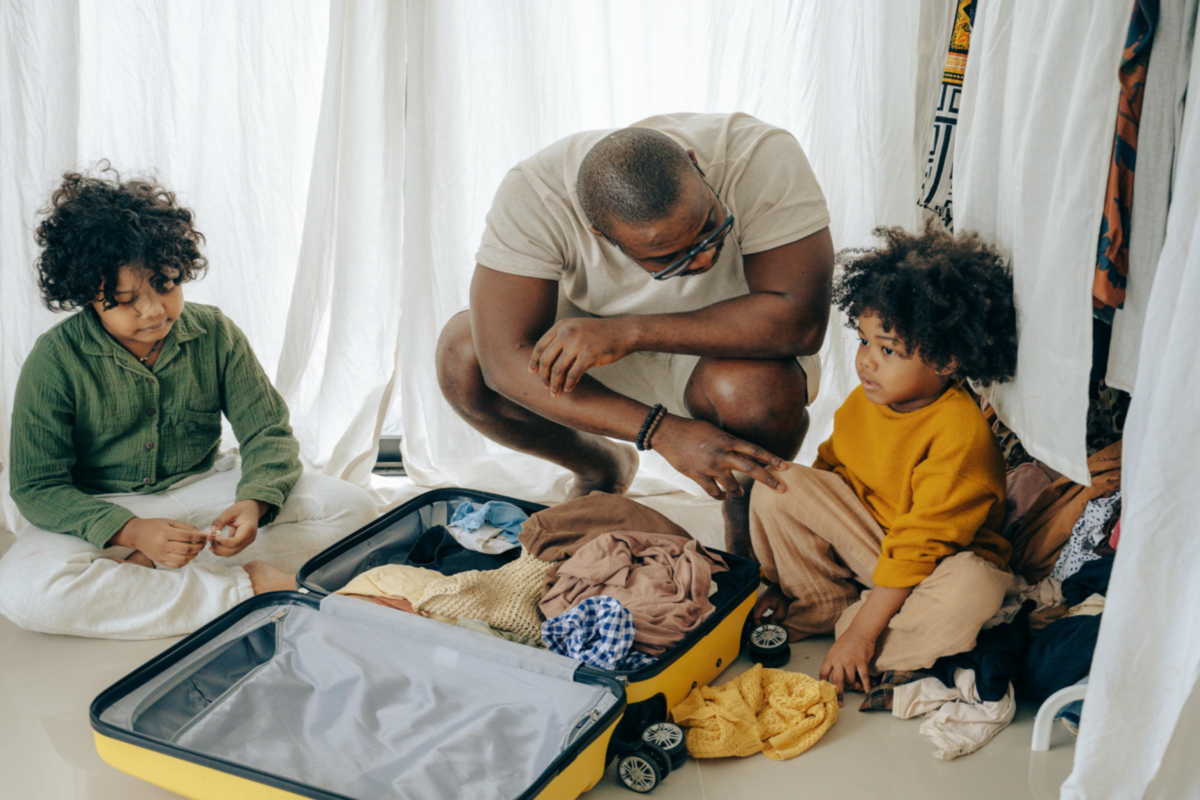
Packing well isn’t about bringing more. It’s about making sure the right things are easy to access when you need them.
Family travel essentials
Packing smart is not always about what you bring and more about where you put it. Keep a small, easy-access bag for essentials you’ll need during transit and throughout the day.
| Item | When it matters | Who it’s for |
| Snacks and drinks | Delays or long stretches without food | All ages |
| Wipes and sanitizer | Spills, sticky hands, quick cleanups | All ages |
| Change of clothes | Spills or accidents while in transit | Infants and younger kids |
| Basic meds | Low-grade fever or sudden headaches | All ages |
| Small toys | Long stretches seated during flights or in restaurants. | Younger kids |
What can I skip?
Not everything needs to come with you. Skip bulky baby gear and “just in case” extras, which add little value and a lot of weight. In most destinations, hotels offer high chairs and cribs, and you can buy basics like diapers or toiletries upon arrival.
A real benefit of packing less is mobility. You don’t have to manage heavy bags while moving between airports and hotels.
If you’re driving a few hours to a vacation house or condo, you have more flexibility. I bring a bit more in that situation since it cuts down on laundry and extra shopping trips. That said, I’ve still found that less is better. Overpacking has a way of making even simple trips feel more complicated once you arrive.
Make transit days more kid-friendly
Adults get bored and uncomfortable on long-haul flights and lengthy drives, and children feel it even more. Here are some strategies for keeping sibling squabbles and crankiness at bay.
- Break up long drives. Plan stops every couple of hours. Even 10-15 minutes to run around or grab a snack can reset everyone’s mood. You’ll arrive later, but not as stressed.
- Use screens strategically. This is not the time to enforce strict screen limits. Download shows or games in advance. Think of it as a tool, not a habit.
- Add one or two new items. A cheap new toy or sticker book can hold attention longer because it’s new.
- Choose audiobooks. A tablet is fine on a plane, but audiobooks work well in the car, especially if a child gets carsick. I spent hours listening to Meryl Streep reading tales from Peter Rabbit, but it kept my toddler entertained and made long drives more enjoyable.
- Be mindful of snacks. Your instinct might be that “more is better,” but instead, pack enough to cover delays. Pack snacks that are easy to eat and not too messy.
How to keep kids engaged when you’re out and about
Getting to your final destination is only part of the challenge. Once you arrive, the focus shifts to keeping kids engaged without packing your daily schedule or pushing them too far.
While it's tempting to fill your itinerary, that’s where family travel starts to fall apart. A better approach is to plan one or two main activities each day and leave space around them.
- Build in breaks. Stop at a park, visit a playground, or schedule time to relax at your hotel or rental. These pauses aren’t wasted time. They make the rest of the day work. If things are going well, you can always add more to the itinerary later.
- Make sure the kids feel involved. Keeping children interested is much easier when they’re involved in the process. Let them pick an attraction and talk them through what they’re seeing in a way they understand.
- Know when to call it a day. Don’t expect every activity to be a success. Knowing when to stop is crucial. When kids start getting tired or restless, it’s better to adjust rather than push through. That might mean cutting a museum visit short or leaving the beach early.
Not every part of a family trip needs to be memorable. Zeroing in on a few special activities each day makes the experience more enjoyable.
What should I do when things go wrong?
No matter how well you prepare, something will go wrong. Flights get delayed. Children get sick. Plans fall apart. The goal isn’t to anticipate every problem. That’s exhausting and unrealistic. Instead, focus on minimizing the impact of unexpected issues.
Put a few pre-trip safeguards in place
- Invest in comprehensive travel insurance. It can help offset the expense of cancellations, delays, lost luggage, and even medical and dental emergencies.
- Build extra time into your schedule. Flexible timelines allow you to build in delays to your schedule, rather than turning them into major disruptions.
- Prepare a short list of nearby pharmacies or clinics. If you’re traveling domestically, your pediatrician may be able to recommend options. For international trips, your hotel concierge is often the fastest and most reliable resource.
Beyond these simple steps, flexibility is your best asset when things go south. I learned this during a trip to Disney World when my daughter got sick. We dropped everything and made sure she was comfortable. It wasn’t the trip we planned, but it was the right call. In moments like this, knowing when to let go is exactly what keeps the vacation from completely unraveling.
Plan ahead for a smooth trip
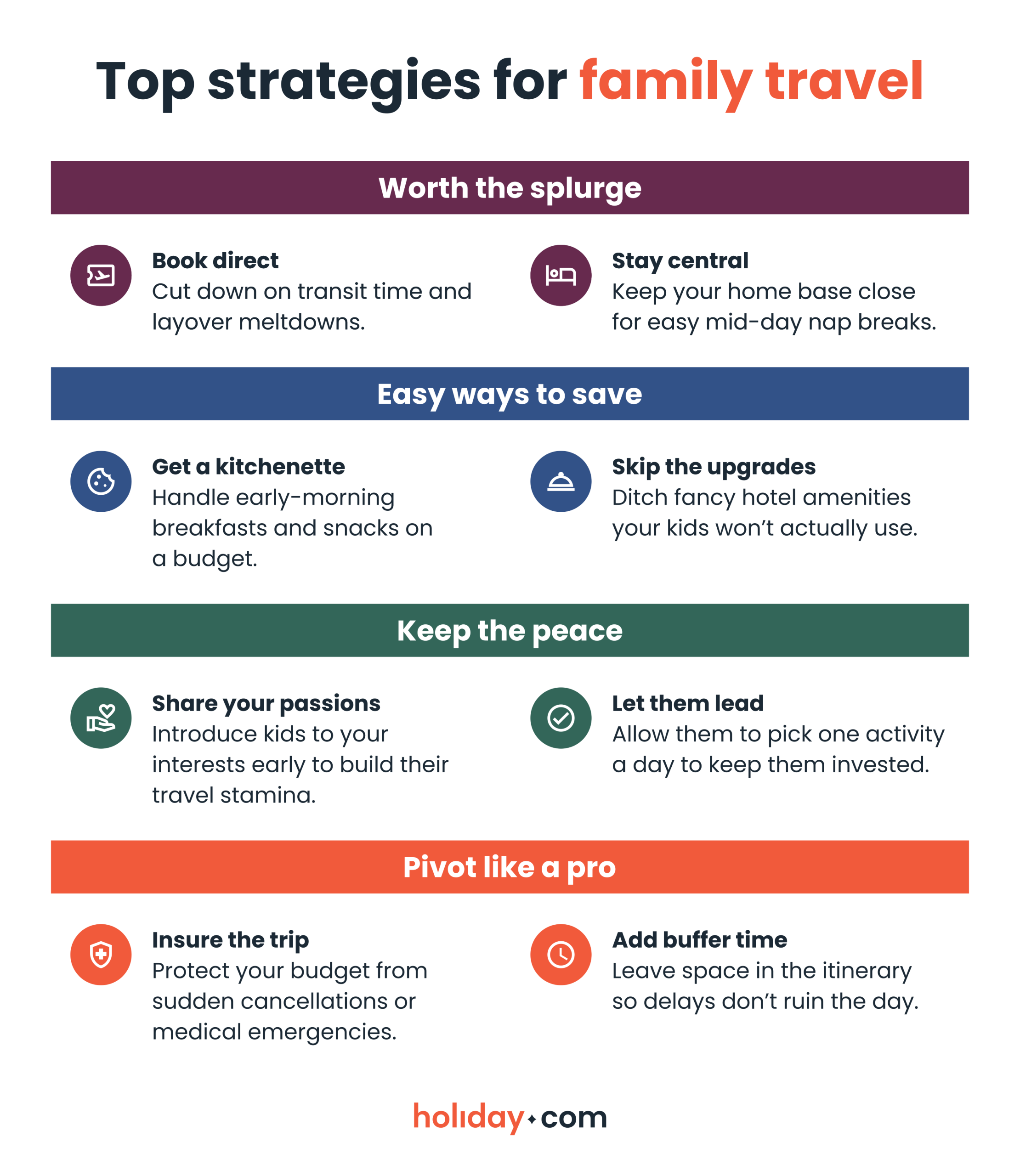
Put your family trip together with these tips in mind:
Stay organized and connected on the go
Reliable internet is a vital tool for parents when traveling. You need it to find the nearest rest stop during a long drive. You rely on it to locate a playground or a kid-friendly restaurant at a moment’s notice.
Hunting for public Wi-Fi while managing a fidgety child isn’t ideal. Having a stable connection 24/7 makes it faster to pull up digital tickets or keep children occupied with apps and games.
The issue is that roaming charges quickly add up, so it’s best to avoid using your home SIM for data while abroad. Some parents opt for local SIM cards, but that means wasting valuable time waiting in long airport kiosk lines.
The most convenient way to sort out connectivity is to install a travel eSIM before you leave home. Unlike a physical SIM, you can activate your eSIM in minutes when you reach your destination. Some top providers, such as holiday.com, offer unlimited data plans for the exact number of days you need.
Save money without sacrificing the experience
Saving money matters, but some choices directly affect how manageable your trip feels. Focus your budget on what makes travel manageable and look for savings in areas that don’t add stress.
| Where to spend | Where to save | The “why” | |
| Flights | Direct routes | Seat selection | Minimize transit time and transfers. Standard seats are fine for kids. |
| Lodging | Central location | Luxury amenities | Stay near the top attractions for easy nap breaks. Skip the fancy hotel bar. |
| Food | One memorable meal | Breakfast and snacks | Choose rooms with kitchenettes or free breakfast to offset the cost of one great meal out. |
| Tech | Connectivity | New toys | Secure an eSIM for essential internet access. Cheap, novel toys entertain kids as well as pricey ones. |
| Protection | Travel insurance | Rental car add-ons | Rebooking flights is a huge expense. Confirm your auto insurance covers rentals before buying extras. |
Prioritize value for budget-friendly family travel
While many airlines still offer free lap seats for infants and toddlers under two, the in-flight experience has changed, and not for the better. Today, especially on shorter flights, airlines aim to keep passengers in their seats for the entire flight.
Buying a separate seat for a toddler is almost always a better choice than saving money on a lap ticket. While the upfront cost is higher, the return on investment on safety, extra space, and your own sanity is worth every penny.
HOT TIP
To balance the budget, look for savings in areas that don’t impact daily stress levels. For example, I’ll avoid luxury hotels in favor of well-located rentals. A rental or even a suite with a kitchen allows you to save on meals, which offsets the cost of the extra flight seat.
Make the most of your family trip
A family vacation should be about the anticipation and the reward of exploring a new destination with your kids. Embrace flexibility and manage expectations to move past the stress.
Focus on the small wins, like a successful flight or a quiet afternoon by the pool after a morning of sightseeing. With the right mindset and tools, you’ll find that discovering the world with your children is one of the most rewarding things you’ll ever do.
FAQ
-
Is it better to stay in a hotel or a rental with kids?

It depends on the trip. For your first family vacation, choose a hotel with amenities like a pool or free breakfast (all-inclusive resorts are especially easy). A rental is best for longer stays or for a picky eater. Having a kitchen and separate bedrooms can make all the difference.
-
Do I need to bring a car seat, or should I rent one?
If you’re flying, bringing your own seat is the safest and most cost-effective option, as most airlines check them for free. However, if you’re taking a trip with a lot of driving, verify in advance whether your rental car agency offers high-quality, up-to-date seats.
-
What should I do if my child gets sick while we’re traveling?
Above all, don’t panic. Always pack a thermometer and basic medications, such as Tylenol or ibuprofen, for low-grade fevers. If you are traveling overseas, the hotel concierge can help you find a doctor, a clinic, or a local pharmacy. Finally, ensure you have travel insurance that includes medical coverage for sudden illnesses.
-
Is it really worth buying a separate seat for a toddler under two?
Yes. While it comes with a higher upfront cost, the extra space lets you use a car seat, which helps many kids sleep better. On long flights, it gives you a dedicated area to manage snacks and toys.
-
How can I keep my kids entertained on a plane without hours of screen time?
First off, there’s nothing wrong with relying on tablets on a plane to keep kids entertained. But if that’s a no-no for your family, try gift-wrapping a few inexpensive new toys. The act of unwrapping is its own entertainment. Reusable sticker pads and magnetic drawing boards also offer great offline fun.
-
Is it cheaper to book family travel mid-week?
Yes. Flights on Tuesdays and Wednesdays are cheaper. Airports are also less crowded these days, which means shorter security lines and a smoother way to get to your destination.
-
How do I handle jet lag with a young child?
Try to adjust to the local time zone as soon as you arrive. Avoid letting kids nap right when you reach the hotel. Instead, push for a slightly early local bedtime. If they must nap, limit it to 35 minutes to avoid disrupting their nighttime sleep.
About our author

You might also be interested in...
-
 Travel
International travel packing list: Never forget a thing
There are always two types of people: some love packing for an international trip and have a whole system worked out. Others might feel anxious about the packing process and dread pulling out their su...
 Ivana Shteriova
 06.24.2026
 -
 Travel
The essential international travel checklist for 2026
Juggling pre-trip logistics like travel documents, banking, and security can make planning a trip feel like a full-time job. Even the most exciting journey can turn stressful when important details sl...
Sarah Kirton
06.03.2026 -
 Travel
19 best girls trip destinations for all travel styles
Somewhere between starting the group chat and comparing different budgets, planning a girls trip can turn from excitement to frustration. One friend wants beaches, another wants culture, someone insis...
Ana Marković
06.03.2026 -
 Travel
21 best honeymoon destinations for every travel style and budget
Planning a honeymoon should be a joyful coda to your wedding, but with a world of possibilities, narrowing it down can feel like another logistical challenge. There’s no one best honeymoon destinati...
Dawn Prevete
05.28.2026 -
 Travel
16 travel tips for frequent flyers: Save time and money in 2026
Waiting in long security lines and dealing with delayed flights can turn even a routine trip into an irritating experience. Without a structured system, these recurring issues waste time and increase ...
Ana Marković
05.21.2026 -
 Travel
Renting a car abroad: A guide to licensing, insurance, and more
Renting a car while abroad comes with some unique challenges, like booking an appropriate car, driving in foreign countries, and even getting the right driver’s license. At the same time, rental age...
Lucca
05.20.2026