

Packing for a ski trip requires strategy. Mountain weather can be unpredictable and change by the hour. Wet gear doesn’t always dry overnight, and bulky layers can quickly exceed airline baggage limits. It’s easy to overpack unnecessary items or, worse, forget something essential. A little planning goes a long way, especially when deciding what you actually need to bring and what you can easily rent at the resort.
We’ll keep things simple and practical. Instead of overwhelming you with extras, we focus on the true essentials, plus a few smart packing hacks we always use on our own ski trips that will keep you warm and comfortable without weighing down your luggage.
Ski trip essentials at a glance
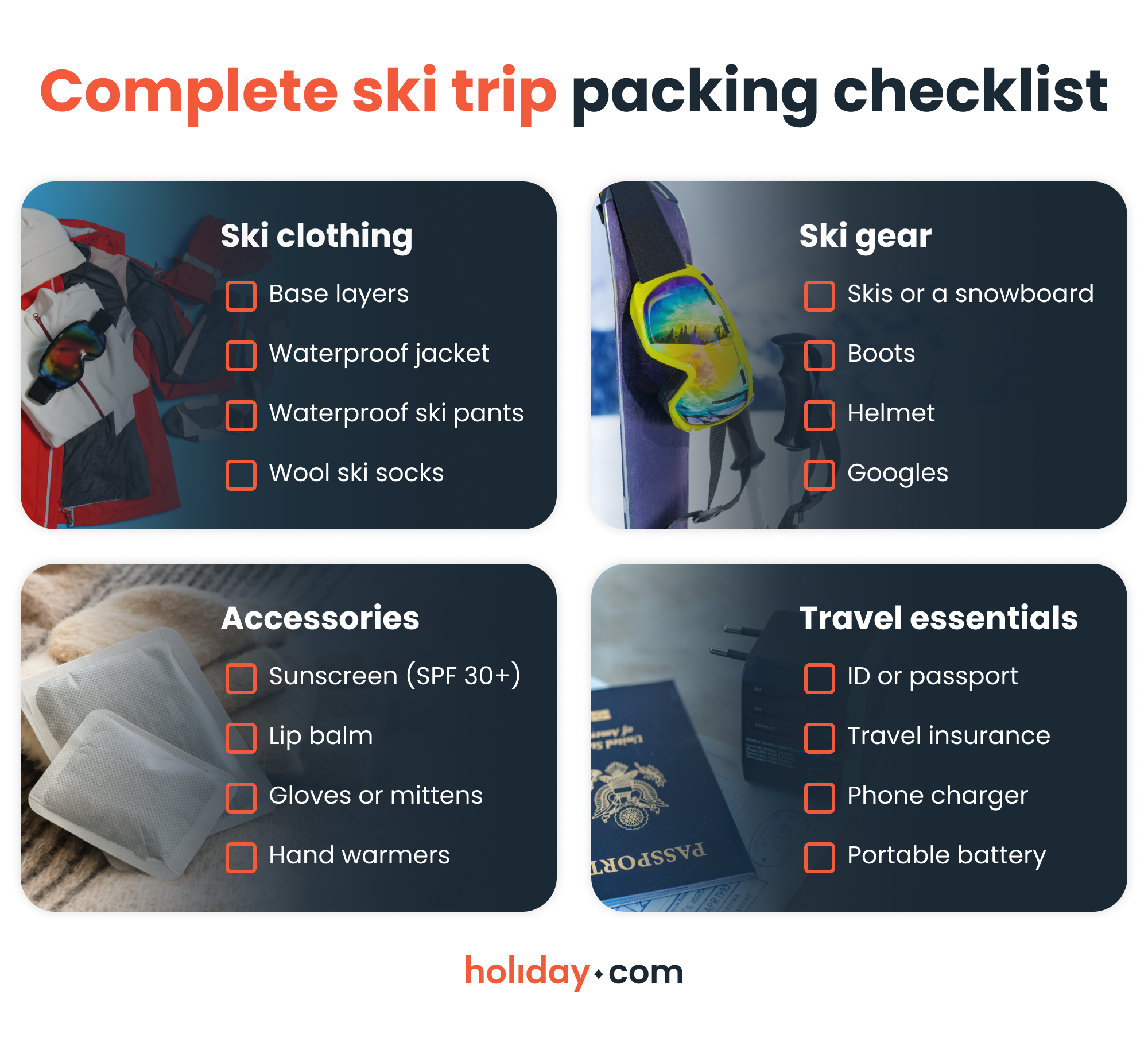
Packing for a ski trip is easier when you break it down into clear categories. Here’s an overview of everything you’ll need, from slope-ready gear to travel-day basics.
What should you pack for skiing?
You'll need proper layering, waterproof outerwear, and warm accessories to stay dry and comfortable on the slopes. Follow the three-layer rule: base layer, insulating layer, and waterproof shell. Use this checklist to build your ski outfits strategically:
- Base layer tops and bottoms
- Mid-layer fleece or lightweight down jacket
- Waterproof ski jacket
- Waterproof ski pants or bibs
- Wool ski socks
- Waterproof gloves or mittens
- Neck gaiter or balaclava
- Warm beanie (for off-slope use)
The golden rule for ski clothing is to avoid cotton entirely. It traps moisture and will leave you cold on the lifts. Always opt for merino wool or synthetic blends instead. Generally, you don't need a fresh base layer for every single day. High-quality wool resists odors, so rotating two or three sets is usually enough for a standard trip.
Make sure your outer layer is truly waterproof, not just water-resistant. Look for jackets and pants with sealed seams and a waterproof rating of at least 10,000 mm (10K), especially for heavy snow or wet conditions. Staying dry is just as important as staying warm.
HOT TIP
Children can get colder faster than adults, especially as they spend more time sitting or playing in the snow. Choose fully waterproof outerwear and pack an extra pair of gloves and wool socks in case the first set gets wet. A slightly warmer midlayer is worth the extra bulk to keep them comfortable all day.
Ski accessories you don’t want to forget
These are small but critical:
- Sunscreen (SPF 30+)
- Lip balm with SPF
- Hand or toe warmers
- Sunglasses
- Small backpack or hydration pack
- Reusable water bottle
Mountain sun is significantly stronger at altitude, even on cloudy days. Apply high-SPF sunscreen and lip balm frequently to prevent severe burns, and keep water handy to prevent dehydration and altitude sickness.
Ski gear: What to bring vs. what to rent
Before you finalize your ski gear checklist, it helps to understand what you should bring and what you can rent. Most resorts offer rental packages, which is the most convenient option for beginners or occasional skiers. If you only ski a few times a year, rent your hard goods (skis, snowboard, and poles) to save on airline baggage fees and avoid unnecessary hassle.
However, we recommend buying your own ski boots once you commit to the sport. Rental boots rarely fit perfectly, and foot pain can ruin a ski day faster than bad weather. It’s also worth bringing your own helmet and goggles for hygiene and better visibility.
| Item | Rent | Bring |
| Skis or snowboard | ✔ | ✗ |
| Ski poles | ✔ | ✗ |
| Ski or snowboard boots | ✗ | ✔ |
| Helmet | ✗ | ✔ |
| Goggles | ✗ | ✔ |
What should you pack for off-the-slopes activities?
Après ski is casual but warm. Mountain towns are practical rather than formal, so leave dress codes behind. Here’s what you’ll want for evenings, village strolls, and downtime at the chalet:
- Winter jacket (or use your ski jacket)
- Sweaters or insulated tops
- Jeans or heavy pants
- Waterproof winter boots
- Swimsuit (for hot tubs or spas)
- Sleepwear
- Casual gloves and hat
While jeans are a staple for dinner, avoid wearing them if you plan to be out in the snow. Denim absorbs moisture quickly and takes a long time to dry. For footwear, leave the fashion boots at home. You need waterproof boots with a heavy tread to navigate icy sidewalks safely.
Travel essentials for a ski vacation
Cold-weather travel requires more than clothing. Here’s a quick checklist to make sure nothing important gets left behind:
- Ski passes or lift tickets
- ID/passport
- Travel insurance details
- Accommodation confirmations
- Medication
- Phone charger
- Portable battery pack
- Travel adapter for international trips
HOT TIP
Public Wi-Fi in ski lodges and villages is notoriously slow and overcrowded. Instead of fighting for bandwidth to message friends or check shuttle schedules, use a holiday.com eSIM to maintain your own secure connection around the resort.
Smart packing tips
A few packing strategies can make your ski trip much easier, especially when dealing with bulky winter gear.
- Pre-load your pockets. Pack small essentials like lip balm and sunscreen directly into your ski jacket’s pockets before placing it in your luggage. This saves space in your toiletries bag and guarantees you won’t scramble to find them on your first morning.
- Pack your ski boots in your carry-on. Airlines misplace luggage, so bring your boots on board to avoid damage. Stuff socks or gloves inside to maximize space and help the boots hold their shape.
- Protect your skis properly. Start by laying one pair of skis flat, base to base, inside a padded ski bag. Secure the brakes in the upright position with ski straps or thick rubber bands. Wrap clothing around the bindings and along the edges to cushion impact. The more tightly packed and stable your bag feels, the better protected your skis will be.
- Wear your bulk. Travel in your ski jacket and winter boots to free up suitcase space.
- Compress everything. Use packing cubes or compression bags to organize layers and squash down bulky fleece or wool items.
HOT TIP
Hack your battery life. Cold temperatures drain phone batteries in minutes, so keep a hand warmer in the same inner pocket as your device.
Prepare early to make the most of your adventure
The best ski trip packing list isn’t about bringing everything. It’s about bringing the right things. Focus on layers, prioritize waterproof protection, and don’t be afraid to rent your hard gear to save hassle at the airport.
Plan early, so you’ll spend less time worrying about the logistics and more time enjoying the slopes.
FAQ
-
What shouldn’t I forget on a ski trip?

Waterproof gloves, wool socks, sunscreen, and lip balm are the most commonly forgotten essentials. Cold air and high-altitude sun can be harsher than expected, so skin protection is just as important as warm layers. Packing an extra pair of gloves in case one gets wet is also a great idea.
-
Can I rent ski gear instead of bringing it?
Yes. Most resorts rent skis, boots, helmets, and poles. It’s often the best option for beginners or occasional skiers, especially if you are flying and want to avoid oversized baggage fees.
-
What is the three-layer rule for skiing?
The three-layer rule for skiing involves a base layer (moisture-wicking), mid-layer (insulation), and outer shell (waterproof protection).
-
How many days of ski clothing should I pack?
For a typical week-long trip, two or three sets are sufficient. You can wear base layers more than once, especially if you choose odor-resistant materials like wool.
-
How do I pack light for a ski trip?
Use a layering strategy instead of bulky, single-purpose items. Choose versatile pieces that you can wear both on and off- the-slopes, and use compression cubes to reduce volume. Wearing your ski jacket and heavy winter boots while traveling also frees up valuable suitcase space.
-
What should I keep with me on the slopes?
Lip balm, sunscreen, phone, small snacks, and a lift pass are all part of a well-prepared ski accessories checklist.
About our author

You might also be interested in...
-
 Travel
International travel packing list: Never forget a thing
There are always two types of people: some love packing for an international trip and have a whole system worked out. Others might feel anxious about the packing process and dread pulling out their su...
 Ivana Shteriova
 06.24.2026
 -
 Travel
The essential international travel checklist for 2026
Juggling pre-trip logistics like travel documents, banking, and security can make planning a trip feel like a full-time job. Even the most exciting journey can turn stressful when important details sl...
Sarah Kirton
06.03.2026 -
 Travel
19 best girls trip destinations for all travel styles
Somewhere between starting the group chat and comparing different budgets, planning a girls trip can turn from excitement to frustration. One friend wants beaches, another wants culture, someone insis...
Ana Marković
06.03.2026 -
 Travel
21 best honeymoon destinations for every travel style and budget
Planning a honeymoon should be a joyful coda to your wedding, but with a world of possibilities, narrowing it down can feel like another logistical challenge. There’s no one best honeymoon destinati...
Dawn Prevete
05.28.2026 -
 Travel
Family travel tips for stress-free vacations with kids
You can color-code your schedule all you want, but a good family vacation hinges on how well you handle the inevitable curveballs. Anticipating and preparing for any potential disruption is impossible...
Dawn Prevete
05.21.2026 -
 Travel
16 travel tips for frequent flyers: Save time and money in 2026
Waiting in long security lines and dealing with delayed flights can turn even a routine trip into an irritating experience. Without a structured system, these recurring issues waste time and increase ...
Ana Marković
05.21.2026