


Terms like sustainable tourism, ecotourism, and responsible travel are thrown around so often that it’s easy to feel confused or skeptical. You might wonder whether sustainable tourism is really a practical and effective way to reduce your travel footprint or if it's just another example of greenwashing.
Sustainable tourism is far more accessible than it may seem. It doesn’t require you to buy expensive upgrades or give up on the travel experiences you love. At its core, it simply means traveling in ways that reduce negative effects while maximizing the positive impact on local environments and communities.
In this article, we’ll show you what sustainable tourism means and why it matters. Learn how to travel in a way that creates lasting benefits for the people and places you visit.
If you feel uncertain about where to begin, we’ll also point you to actionable resources. It doesn’t have to be overwhelming to start making a positive impact. Sustainable tourism isn’t a rigid checklist of rules, but rather a flexible approach that helps you make more thoughtful travel decisions.
Why does sustainable tourism matter?
Sustainable tourism can take several forms in order to create different benefits, but the same principles define it at its core.
Sustainable travel at a glance
The idea of sustainability is not new. It entered the global conversation in 1987, when the Brundtland Report defined sustainable development as meeting present needs without compromising future generations.
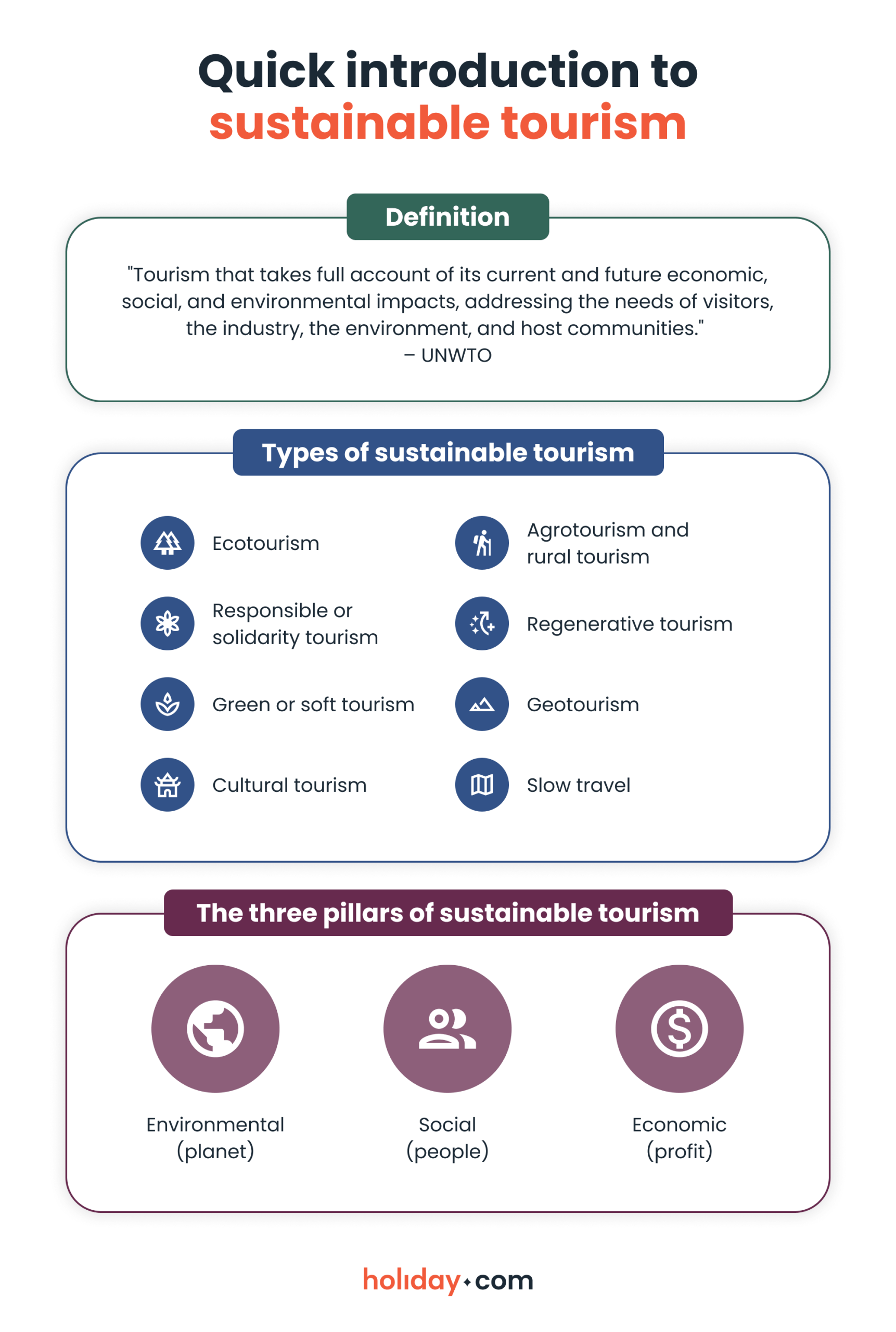
In 2005, the UN World Tourism Organization (UNWTO) applied this principle to travel, formally defining sustainable tourism in its “Making Tourism More Sustainable” report. The infographic below highlights this definition and the core concepts that shape sustainable tourism today.
Defining sustainable tourism in simple terms
Beyond its academic definition, sustainable tourism means reducing the negative impacts of travel while increasing positive effects on the environment and local economy. More precisely, it’s about making choices that balance environmental protection and social responsibility with the entertainment and economic benefits of tourism.
It’s not only about nature or reducing your carbon footprint. The goal isn’t to limit your adventures but to make your travel more thoughtful and viable for the future.
Types of sustainable tourism
Terms like ecotourism and responsible travel are often used interchangeably, but they’re subsets of the broader concept of sustainable tourism. While there’s no official categorization, these are the main types you might encounter:
- Ecotourism: Travel focused on natural areas to conserve the environment and support the well-being of local communities.
- Agrotourism and rural tourism: Visits to farms or rural regions that support the area’s agriculture and provide authentic rural experiences.
- Community-based tourism: Tourism managed by locals to preserve cultural heritage and ensure the economic benefits stay within the community.
- Responsible or solidarity tourism: Tourism that prioritizes ethical, respectful interactions with the locals and often supports community initiatives.
- Regenerative tourism: Travel that actively restores and improves the environmental and social systems of the destination.
- Green or soft tourism: It focuses on low-impact travel experiences such as hiking and cycling. It also involves eco-friendly practices like reducing waste and relying on renewable energy sources.
- Geotourism: Travel that sustains or enhances the geological character of a place. In contrast to ecotourism, this focuses on non-living aspects of the environment, whether it’s a natural feature like a volcano or a man-made geopark.
- Cultural tourism: Travel centered around engaging and preserving local traditions and heritage.
- Slow travel: Tourism that encourages spending more time in a single place. This reduces the carbon footprint associated with multi-location itineraries and allows for a deeper connection with the destination.
What are the principles and benefits of sustainable tourism?
Sustainable tourism depends on core principles that balance its three primary considerations.
The three core pillars of sustainable tourism
Three key pillars guide sustainable tourism:
- Environmental sustainability (planet): Protecting and conserving natural resources and biodiversity within ecosystems.
- Social sustainability (people): Respecting cultural heritage and local traditions.
- Economic sustainability (profit): Supporting the long-term financial viability of tourism while creating lasting benefits for small communities.
These pillars are more than theoretical concepts. They act as practical guides that shape how sustainable tourism works in the real world.
Advantages of sustainable tourism
The goal of sustainable tourism is not only to reduce harm, but to create measurable benefits for everyone involved. The infographic below highlights the massive global impact of travel and tourism, putting the scale of the industry into perspective.
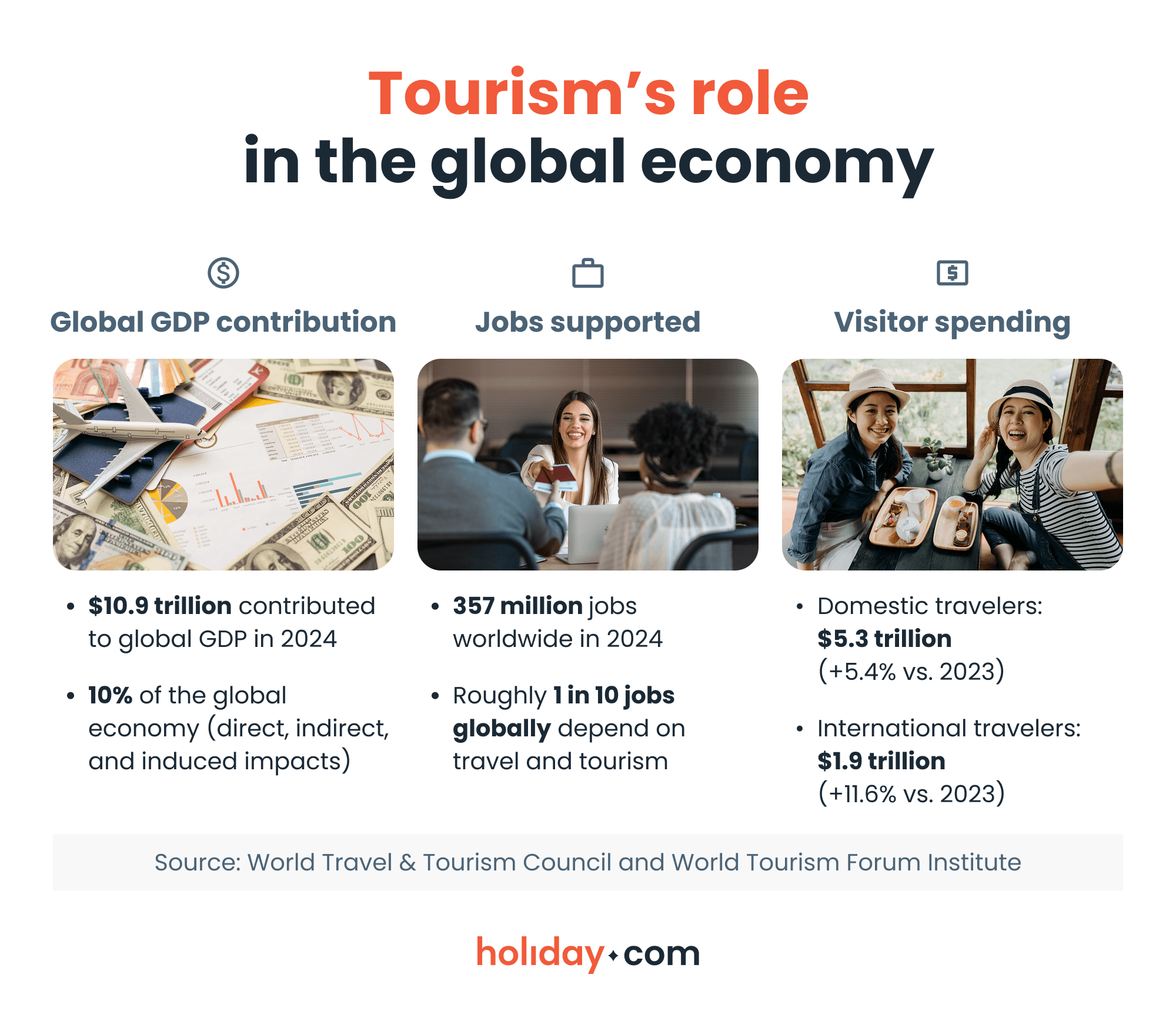
Now that we’ve seen this bigger picture, let’s take a closer look at the specific benefits sustainable tourism brings.
Environmental benefits
The positive environmental impact of sustainable tourism comes from travel models that prioritize long-term environmental stability over short-term convenience. Many of these practices fall on tourism providers or the communities themselves, who may provide eco-friendly accommodations or promote lower-impact experiences.
Travelers can also contribute to the environmental benefits with eco-conscious choices. For example, opt for low-carbon transportation options such as taking the train instead of flying. Together, all these actions reduce environmental pressures while preserving the natural assets that make destinations attractive.
Social benefits
Sustainable tourism seeks to empower communities and strengthen cultural heritage. It fosters deeper intercultural understanding while creating opportunities for education and skill development.
In many destinations, local communities have little control over how tourism develops, especially when foreign investors and international chains dominate the industry. Sustainable tourism helps return that control to the people, ensuring that their voices shape the experiences travelers enjoy.
Economic benefits
Sustainable tourism strengthens local economies, creating lasting benefits for communities. It generates jobs by supporting entrepreneurship, and it helps ensure that tourism revenue stays within the region. Communities can reinvest this income into projects like infrastructure and education, helping residents thrive while enhancing the appeal of destinations for future travelers.
How to participate in sustainable tourism
The goal of practicing sustainable tourism is to build lasting habits that benefit the people you meet and the places you visit. Here’s where to begin.
Adopt a sustainability mindset
Developing a sustainability mindset starts with identity. See yourself as a thoughtful, responsible traveler rather than trying to adopt every sustainable habit on your next trip. Take a moment to reflect on your values and align them with your travel decisions.
Make a simple list of the experiences or destinations you’re considering, then explore how they approach sustainability. If that feels like too much, keep it easy and focus on one area that you want to improve. Even small choices matter. Start with one conscious decision, then let it build from there.
HOT TIP
Subscribe to newsletters, follow Instagram creators, or join Facebook groups focused on sustainable travel. Learning through community engagement makes sustainable travel feel practical and approachable, allowing you to pick up ideas from real experiences rather than feeling overwhelmed by rigid rules.
Start the sustainability journey at home
Sustainable travel begins long before you pack your bags. It starts with the choices you make at home, including when you travel, where you go, how you get there, where you’ll stay, and how you approach your journey overall.
Select destinations that prioritize environmental protection and community well-being, and consider off-season travel to reduce overtourism. Choose local accommodations, such as family-run guesthouses or small eco-lodges. It’s also better to spend more time in one place rather than pack your itinerary with multiple destinations, which increases your carbon footprint.
Put sustainability into action on the road
Once you arrive at your destination, let your sustainable mindset guide your choices. Shop at small stores to keep your spending within the community. The experiences you choose also make an impact. Support the economy by hiring local guides and engaging with community-based artisans.
You can also contribute positively by attending cultural events and participating in activities focused on conservation. From simple everyday habits to high-level travel decisions that can make a big difference, you can make a positive impact.
Common misconceptions about sustainable tourism

If you feel unsure about sustainable tourism because of mixed messages, you’re not alone. Let’s debunk some of the most common myths together:
- It’s too expensive. Traveling sustainably doesn’t have to break the bank. Many eco-friendly practices, like using public transport, are inherently budget-friendly. Other cost-effective ideas include staying at local guesthouses and eating at neighborhood restaurants.
- You must sacrifice comfort. Sustainable travel doesn’t mean staying in a hut or going off the grid. Many hotels and resorts now combine comfort with eco-friendly practices, letting you enjoy modern amenities while supporting sustainable tourism.
- One traveler can’t make a difference. Small, everyday choices can add up to meaningful changes. Booking an eco-conscious tour through a small neighborhood business impacts the business owner and their community.
- It’s only about the environment. Conservation matters, but it’s one part of the picture. Sustainable tourism is also about supporting economies and preserving cultural heritage.
- Flying is off-limits. While flights have a large carbon footprint, responsible travel focuses on the overall trip impact. Flying can be unavoidable, but you can reduce your effect by taking direct flights and staying longer in one location to spend less time in the air.
- It’s only for rural areas. Sustainable travel applies everywhere, including cities. You can practice low-impact tourism in major cities by using public transit and supporting small businesses.
HOT TIP
Watch out for greenwashing. Many hotels and tour services claim to be “eco-friendly” but make little real impact. Check for verified certifications and clear sustainability policies to ensure your choices genuinely help the environment and communities.
What’s the future of sustainable tourism?
Sustainable tourism is evolving faster than ever, and travelers like you are at the center of that change. Here are some innovative solutions and community-driven initiatives that help explore the world responsibly.
- Tech for greener travel: Apps and digital tools help you plan and manage your trip while reducing waste. For example, you can download a travel eSIM like holiday.com instead of buying a single-use plastic SIM card for internet access.
- Regenerative travel: Going beyond “doing no harm” to improve destinations, from reforestation and ecosystem restoration to boosting community well-being.
- Eco-friendly accommodations: Growing demand for certified green hotels and lodges that manage water in an ethical way and rely on renewable energy sources.
- Cultural and community focus: Prioritizing authentic community experiences helps ensure that economic benefits stay in the community.
- Smarter infrastructure and policies: Governments and organizations implementing measures to combat overtourism and protect destinations for the long term.
Sustainable tourism can be simple and affordable
Sustainable tourism isn’t just for green experts or high-budget travelers. At its core, it is about balancing the three key pillars of environmental protection, social responsibility, and economic benefits through conscious choices. By building awareness and understanding how your travel impacts people and the planet, you’re well-equipped to make a meaningful difference.
FAQ
-
What is an example of sustainable tourism?

Staying in a local guesthouse, supporting small businesses, and engaging in cultural or conservation activities are some examples of sustainable tourism.
-
What is the main goal of sustainable tourism practices?
The main goal of sustainable tourism is to maximize the positive impacts of travel, such as growing the area’s economy and preserving the culture of a destination. It’s meant to reduce the negative effects of tourism and improve social equity.
-
What are the three pillars of sustainable tourism?
Sustainable tourism rests on three pillars: economic, social, and environmental. The economic pillar focuses on supporting small businesses and creating long-term financial benefits for communities. The social pillar emphasizes respecting and preserving cultural heritage. The environmental pillar prioritizes protecting natural resources, ecosystems, and biodiversity.
-
What is responsible tourism?
The 2002 World Summit on Sustainable Development defines responsible tourism as “making better places for people to live in and better places for people to visit.” This means that everyone involved, from governments and hoteliers to travelers, should take actions that minimize harm and maximize positive impact.
-
What are the types of sustainable tourism?
Sustainable tourism can take many forms, including ecotourism, responsible tourism, cultural tourism, green tourism, and slow tourism, each focusing on different aspects of sustainability.
-
What is sustainable tourism according to the UNWTO?
According to the UN World Tourism Organization (UNWTO), sustainable tourism “takes full account of its current and future economic, social, and environmental impacts, addressing the needs of visitors, the industry, the environment, and host communities.” In simpler terms, sustainable tourism aims to reduce the negative impact of travel while increasing positive effects on the local environment and economy.
About our author

You might also be interested in...
-
 Travel
International travel packing list: Never forget a thing
There are always two types of people: some love packing for an international trip and have a whole system worked out. Others might feel anxious about the packing process and dread pulling out their su...
 Ivana Shteriova
 06.24.2026
 -
 Travel
The essential international travel checklist for 2026
Juggling pre-trip logistics like travel documents, banking, and security can make planning a trip feel like a full-time job. Even the most exciting journey can turn stressful when important details sl...
Sarah Kirton
06.03.2026 -
 Travel
19 best girls trip destinations for all travel styles
Somewhere between starting the group chat and comparing different budgets, planning a girls trip can turn from excitement to frustration. One friend wants beaches, another wants culture, someone insis...
Ana Marković
06.03.2026 -
 Travel
21 best honeymoon destinations for every travel style and budget
Planning a honeymoon should be a joyful coda to your wedding, but with a world of possibilities, narrowing it down can feel like another logistical challenge. There’s no one best honeymoon destinati...
Dawn Prevete
05.28.2026 -
 Travel
Family travel tips for stress-free vacations with kids
You can color-code your schedule all you want, but a good family vacation hinges on how well you handle the inevitable curveballs. Anticipating and preparing for any potential disruption is impossible...
Dawn Prevete
05.21.2026 -
 Travel
16 travel tips for frequent flyers: Save time and money in 2026
Waiting in long security lines and dealing with delayed flights can turn even a routine trip into an irritating experience. Without a structured system, these recurring issues waste time and increase ...
Ana Marković
05.21.2026